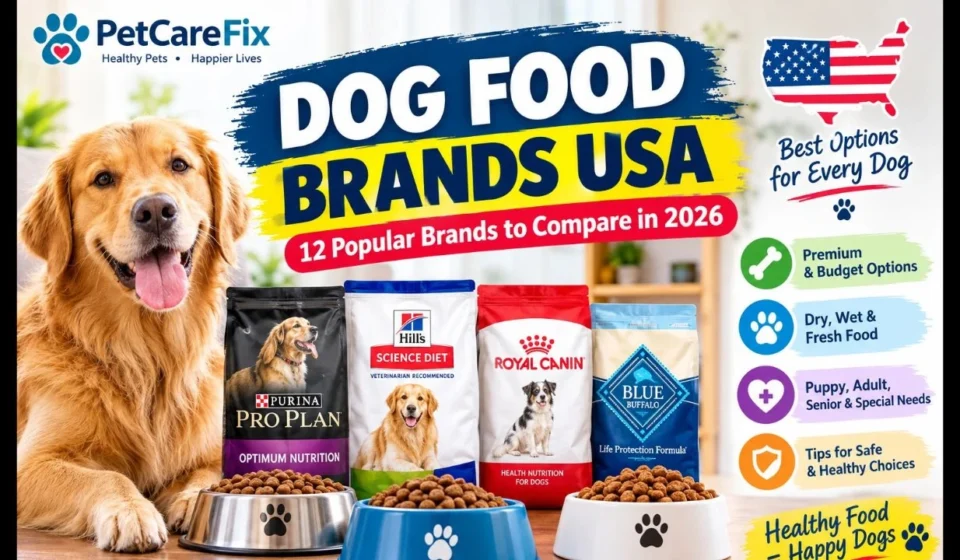

Choosing the right dog food can feel confusing when American pet stores offer hundreds of brands, recipes, and price points. Some dog owners want affordable kibble, while others are searching for veterinarian-recommended nutrition, sensitive-stomach formulas, wet food, or fresh meals.
This guide compares popular dog food brands in the USA, explains what to look for on food labels, and helps you choose a diet based on your dog’s age, size, health, and budget. Veterinary-reviewed guides commonly highlight brands such as Hill’s Science Diet, Purina Pro Plan, and Royal Canin, but no single food is best for every dog.
A good dog food should provide the nutrients your dog needs, be appropriate for its life stage, and come from a manufacturer with reliable quality-control practices. Price and ingredient lists matter, but they do not tell the whole story.
The U.S. Food and Drug Administration (FDA) explains that the nutritional adequacy statement on a pet food label helps owners determine whether a food is intended to provide complete and balanced nutrition.
Before buying a new brand, consider three things:
- Your dog’s age, weight, activity level, and body condition.
- Any allergies, digestive problems, or medical conditions.
- Your budget and the manufacturer’s nutritional research and quality controls.
12 Popular Dog Food Brands in the USA
The following brands offer different types of dog food. This is a comparison guide, not a scientifically ranked list or a guarantee that every recipe from every brand is suitable for every dog.
1. Purina Pro Plan
A popular option for owners looking for specialized nutrition, including formulas for active dogs and dogs with sensitive skin or stomachs.
- Best for: Owners comparing targeted nutritional formulas.
- Food types: Dry kibble and wet food.
- Consider: Select a formula appropriate for your dog’s age and specific needs.
2. Hill’s Science Diet
Offers life-stage-specific foods and options for dogs with particular nutritional needs. It is frequently featured in veterinarian-reviewed dog food guides.
Best for: Owners seeking established, research-oriented nutrition.
- Food types: Dry and wet food.
- Consider: Ask your veterinarian whether a particular formula fits your dog’s needs.
3. Royal Canin
Offers diets designed around life stage, breed size, and specific nutritional requirements.
- Best for: Owners comparing size-specific formulas.
- Food types: Dry and wet food.
- Consider: Breed-focused marketing alone does not establish that a food is better for every dog of that breed.
4. IAMS
A mainstream option for households comparing everyday nutrition and value.
- Best for: Owners seeking conventional daily feeding options.
- Food types: Dry and wet food.
- Consider: Check the life-stage statement and feeding instructions.
5. Eukanuba
Provides formulas for different life stages and activity requirements.
- Best for: Owners comparing nutrition for active dogs.
- Food types: Primarily dry food, with product availability varying.
- Consider: Match the calorie content to your dog’s daily exercise.
6. Blue Buffalo
Offers a broad selection of recipes, including Life Protection and other specialized product lines.
- Best for: Owners comparing multiple recipe and ingredient options.
- Food types: Dry and wet food.
- Consider: Review the complete nutrition label rather than relying on front-of-package claims.
7. Wellness
Offers recipes across several product lines, including options marketed for different life stages and dietary preferences.
- Best for: Owners exploring alternative mainstream and premium recipes.
- Food types: Dry and wet food.
- Consider: Confirm nutritional adequacy and suitability for your dog’s age.
8. Merrick
Provides several dry, wet, and specialty recipe options.
- Best for: Owners comparing different protein sources and recipe styles.
- Food types: Dry and wet food.
- Consider: A higher-protein label does not automatically make a food more suitable for every dog.
9. Nutro
Offers everyday dog food recipes with different protein sources and life-stage options.
- Best for: Owners comparing conventional and limited-ingredient-style recipes.
- Food types: Dry and wet food, depending on the product line.
- Consider: Check ingredients carefully if your dog has a diagnosed food allergy.
10. Freshpet
Specializes in refrigerated fresh pet food, offering an alternative to traditional shelf-stable kibble.
- Best for: Owners interested in refrigerated meals.
- Food types: Refrigerated fresh food.
- Consider: Follow refrigeration, handling, and storage instructions carefully.
11. JustFoodForDogs
Offers fresh and other specially prepared canine diets, including selected recipes supported by feeding-trial information.
- Best for: Owners exploring fresh-food feeding.
- Food types: Fresh, frozen, and other recipe formats.
- Consider: Check whether the specific product is complete and balanced or intended only as a supplement.
12. Open Farm
Offers dry, wet, and other pet food formats, with an emphasis on ingredient sourcing and traceability.
- Best for: Owners who prioritize sourcing information.
- Food types: Dry, wet, and other recipe formats.
- Consider: Evaluate nutritional evidence and complete-and-balanced labeling in addition to sourcing claims.
Dog Food Brands USA Comparison Table
Use this table to narrow down your choices based on feeding style and your dog’s needs.
| Brand | Main option to explore | Best starting point |
|---|---|---|
| Purina Pro Plan | Dry and wet | Targeted nutrition |
| Hill’s Science Diet | Dry and wet | Life-stage nutrition |
| Royal Canin | Dry and wet | Size-specific formulas |
| IAMS | Dry and wet | Everyday feeding |
| Eukanuba | Primarily dry | Active dogs |
| Blue Buffalo | Dry and wet | Recipe variety |
| Wellness | Dry and wet | Different dietary preferences |
| Merrick | Dry and wet | Protein and recipe variety |
| Nutro | Dry and wet | Everyday recipe options |
| Freshpet | Refrigerated | Fresh-food feeding |
| JustFoodForDogs | Fresh and frozen options | Fresh-food diets |
| Open Farm | Dry, wet, and other formats | Ingredient sourcing |
Product availability and formula options can change. These descriptions are general comparisons, not endorsements of every product within a brand.
What Is the Best Dog Food Brand for Your Dog?
There is no single best dog food brand for every dog. The most suitable choice depends on age, size, health, activity level, and individual tolerance.
Best dog food brands for puppies
Look for a formula labeled for growth or the appropriate puppy life stage. Large-breed puppies have particular growth-related nutritional requirements, so select a suitable large-breed puppy formula when indicated.
Best dog food brands for adult dogs
Choose a complete and balanced adult-maintenance formula. Control portion sizes according to your dog’s body condition and activity level to help maintain a healthy weight.
Best dog food brands for senior dogs
Older dogs may benefit from diets adjusted for calorie needs, mobility, or particular medical conditions. Age alone does not determine the right food; ask your veterinarian whether a senior-specific formula is appropriate.
Best dog food brands for small breeds
Small-breed formulas may provide appropriately sized kibble and calorie density. Compare the nutritional statement and feeding guidance instead of choosing based on kibble size alone.
Best dog food brands for sensitive stomachs
Digestive problems can have many causes. A veterinarian may recommend a particular easily digestible diet or a therapeutic food, depending on the symptoms. Do not assume that every product marketed for sensitive stomachs treats a medical condition.
How to Choose a Safe and Healthy Dog Food Brand
1. Check the complete-and-balanced statement
Look for a nutritional adequacy statement indicating that the food is complete and balanced for your dog’s relevant life stage. The FDA and the Association of American Feed Control Officials (AAFCO) explain why this statement matters when comparing pet foods.
Treats, toppers, and supplements may not be suitable as the sole diet.
2. Research the manufacturer
Ask whether the company employs qualified animal nutrition experts, conducts feeding trials, performs quality-control testing, and can explain where and how its products are manufactured.
The WSAVA Global Nutrition Committee provides questions that owners can ask pet food manufacturers. It does not certify individual brands or publish an official list of approved brands.
3. Compare ingredients in context
The ingredient list is useful for identifying protein sources and ingredients your dog may need to avoid. However, it does not independently prove that one food is nutritionally superior to another.
A complete nutritional assessment considers the entire formula, nutrient levels, digestibility, quality control, and research.
4. Choose the right life-stage formula
Puppies, adult dogs, and dogs with particular health needs may require different nutritional profiles. Check the package carefully before purchasing.
5. Review calories and feeding instructions
Two foods can have different calorie densities even when their recommended serving sizes appear similar. Follow the label as a starting point and adjust portions based on your dog’s weight and veterinary guidance.
Dry Dog Food vs. Wet Dog Food vs. Fresh Dog Food
The format matters for convenience, storage, cost, and your dog’s preferences. A particular format is not automatically healthier than another.
| Food type | Advantages | Things to consider |
|---|---|---|
| Dry kibble | Convenient, easy to store, often economical per serving | Check calories and portion sizes |
| Wet canned food | Higher moisture content and often appealing texture | May cost more per calorie; refrigerate leftovers as directed |
| Refrigerated fresh food | Different texture and feeding experience | Requires careful refrigeration and handling |
| Frozen fresh food | Can offer additional recipe options | Requires freezer space and safe thawing |
| Freeze-dried food | Lightweight and convenient to store | Check whether it is complete and balanced; follow rehydration instructions if needed |
If you are changing food formats, compare the calorie content rather than substituting equal volumes automatically.
Are Expensive Dog Food Brands Better?
Not necessarily. A more expensive food may use a different recipe, manufacturing process, packaging, or feeding format, but price alone cannot establish nutritional quality.
When comparing affordable and premium dog food brands in the USA, consider:
- Nutritional adequacy for your dog’s life stage.
- Evidence supporting the manufacturer’s formulation and quality controls.
- Cost per day rather than just the bag price.
- Whether your dog maintains a healthy body condition and tolerates the food.
- Any veterinary dietary recommendations.
For some households, a conventional dry food provides a practical complete diet. Other dogs may need a specialized formula. The goal is to find an appropriate, nutritionally sound food that fits your budget.
How to Check Dog Food Recalls in the USA
A popular brand is not automatically free from safety issues. Recalls can affect specific products, recipes, or production lots rather than every item sold under a brand name.
Before buying dog food, check the FDA’s official Recalls and Withdrawals page.
Follow these steps:
- Find the exact product name and recipe on the package.
- Locate the lot number and best-by date.
- Compare those details with official recall notices.
- Follow the instructions in any applicable recall notice.
- Contact your veterinarian if your dog ate affected food or shows signs of illness.
The FDA explains that lot numbers help identify the specific batches involved in a recall.
Frequently Asked Questions About Dog Food Brands USA
1. What are the best dog food brands in the USA?
Popular brands to compare include Purina Pro Plan, Hill’s Science Diet, Royal Canin, IAMS, Eukanuba, and Blue Buffalo. The best choice depends on your dog’s individual nutritional needs, life stage, and health.
2. Which dog food brands do veterinarians recommend?
Veterinarian-reviewed guides frequently discuss Purina Pro Plan, Hill’s Science Diet, and Royal Canin. However, veterinarians should consider the individual dog and the evidence supporting the specific formula rather than relying on a brand name alone.
3. What are the most affordable dog food brands in America?
IAMS and some Purina product lines are worth comparing when shopping for everyday dog food. Actual costs depend on the recipe, package size, your dog’s weight, and daily feeding requirements. Compare the cost per day rather than just the shelf price.
4. Is dry dog food better than wet dog food?
Neither format is universally better. Both can provide complete and balanced nutrition when the specific product is formulated for your dog’s needs. Consider hydration, calorie intake, storage, cost, and your dog’s preferences.
5. How do I know if a dog food brand is safe?
Check its nutritional adequacy statement, research the manufacturer’s nutrition expertise and quality-control practices, and review official recall notices. Ask your veterinarian if you have concerns about a specific product or your dog’s health.
6. Should I choose grain-free dog food?
Grain-free food is not automatically healthier. Some dogs have specific dietary needs, but most do not require grain-free diets. The FDA has investigated a potential association between certain diets, particularly some grain-free diets containing substantial amounts of peas, lentils, and other pulses, and canine dilated cardiomyopathy. Discuss a grain-free diet with your veterinarian before switching.
7. How often should I change my dog’s food brand?
There is no universal schedule requiring you to change brands regularly. If your dog’s current food is nutritionally appropriate and well tolerated, there may be no need to switch. When changing diets, transition gradually over several days or as your veterinarian recommends.
Conclusion
The best dog food brands in the USA offer different options for puppies, adult dogs, senior dogs, and pets with particular nutritional needs. Rather than choosing the most expensive food or relying on marketing claims, focus on nutritional adequacy, manufacturer quality controls, appropriate calorie intake, and your dog’s individual health.
For PetCareFix readers, Purina Pro Plan, Hill’s Science Diet, and Royal Canin are useful starting points for comparing research-oriented nutrition, while IAMS and other mainstream brands may suit owners looking for everyday options. Freshpet and JustFoodForDogs offer alternatives for people interested in fresh-food feeding.
Always verify the specific recipe, check current recalls, and consult a veterinarian when your dog has a medical condition or special dietary needs.
Also read:-