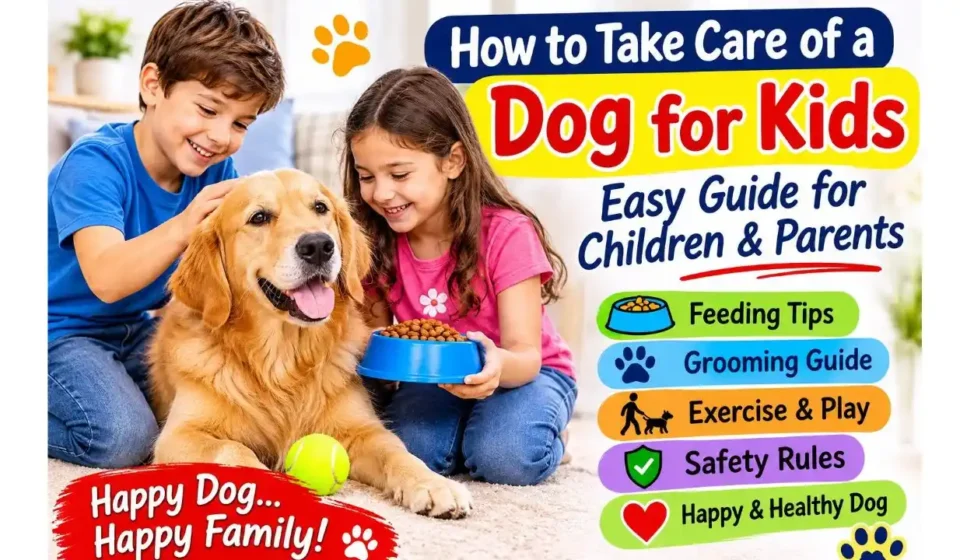

Dogs can be wonderful family pets. They bring happiness, companionship, and opportunities for children to learn responsibility, kindness, and patience. However, taking care of a dog involves more than playing and giving treats. Dogs need fresh water, nutritious food, exercise, grooming, training, and regular veterinary care.
If you are wondering how to take care of a dog for kids, this guide explains the basics in simple language. Whether your family has a new puppy or an adult dog, children can learn safe, age-appropriate ways to help care for their furry friend at home.
Parents also play an important role. Adults should supervise interactions between children and dogs, handle medical care, and make sure the dog’s needs are always met.
In this guide, you will learn how to take care of a dog for kids in the house, how children can help care for a dog at home, and which responsibilities are suitable for different ages.
Why Is It Important for Kids to Learn Dog Care?
Learning to care for a dog can help children develop important life skills. When children participate in everyday pet care with adult guidance, they can learn to be responsible and considerate.
Here are some benefits of teaching kids how to care for a dog:
- Responsibility: Children learn that pets depend on people for their daily needs.
- Kindness: Caring for a dog encourages gentle and respectful behavior.
- Patience: Training and building trust with a dog take time.
- Routine: Feeding, brushing, and playtime help children understand daily schedules.
- Companionship: Spending time with a family dog can provide comfort and enjoyment.
However, getting a dog should be a family decision. Children can help with care, but adults must remain responsible for the animal’s health, safety, and well-being.
1. Give Your Dog Fresh Water Every Day
One of the easiest ways kids can help care for a dog is by making sure it has clean, fresh water.
Dogs need water throughout the day, especially after playing, walking, or spending time outdoors in warm weather.
How Kids Can Help
Children can help by following these simple steps:
- Check whether the dog’s water bowl is empty.
- Tell a parent if the water needs to be changed.
- With adult permission, empty the bowl and refill it with clean water.
- Make sure the bowl is placed somewhere the dog can easily reach.
Younger children should ask an adult for help lifting or washing bowls.
Important tip: Never deliberately limit a dog’s access to drinking water as a way to control bathroom accidents. If your dog suddenly drinks much more or less than usual, tell an adult so they can contact a veterinarian if necessary.
2. Help Feed Your Dog the Right Food
Dogs need balanced nutrition to stay healthy. Puppies, adult dogs, and senior dogs may have different nutritional requirements, so families should choose food appropriate for the dog’s age, size, and health.
Children can participate in feeding time, but an adult should determine the correct food and portion size.
How to Take Care of a Dog for Kids at Home During Mealtime
Follow these simple rules:
- Feed your dog at the times chosen by your parents.
- Use the correct portion measured by an adult.
- Keep the dog’s food bowl in a clean, quiet place.
- Never disturb the dog while it is eating.
- Ask an adult before giving your dog any human food or extra treats.
Avoid feeding dogs chocolate, grapes, raisins, onions, garlic, or products containing xylitol, an artificial sweetener that can be dangerous to dogs.
If your dog accidentally eats something potentially toxic, tell an adult immediately. They should contact a veterinarian or an animal poison control service for advice.
Can Kids Give Dogs Treats?
Yes, with adult permission. Choose treats suitable for dogs and offer only small amounts. Treats should not replace balanced meals, and excessive treats can contribute to weight gain.
Children should never use food to tease a dog or take food away from it.
3. Create a Comfortable Sleeping Place
Every dog needs a safe, comfortable place to rest. A quiet sleeping area can help your pet feel secure in your home.
You can help make your dog’s resting space comfortable by:
- Keeping its bed clean and dry.
- Placing the bed away from busy walkways.
- Providing a quiet area where the dog can relax.
- Keeping toys and bedding suitable for the dog’s size.
- Asking before touching the dog while it is sleeping.
Dogs need plenty of rest, particularly puppies and older dogs. If your dog is sleeping, leave it alone unless an adult needs to check on its safety.
4. Take Your Dog for Walks and Exercise
Dogs need regular physical activity to stay healthy and happy. Walking, playing fetch, and exploring safe outdoor spaces are excellent ways for dogs to exercise.
However, the amount of exercise a dog needs depends on its age, breed, size, and health.
How Kids Can Help With Dog Exercise
Children can participate in exercise activities with an adult:
- Play fetch in a secure, fenced yard.
- Roll a ball for the dog to chase.
- Walk alongside a parent who holds the leash.
- Play gentle indoor games when outdoor exercise is not possible.
- Provide toys that encourage safe play.
Young children should not walk a strong or unfamiliar dog alone. An adult should handle the leash, especially near roads, other animals, and crowded public areas.
Avoid exercising dogs during extreme heat. Make sure your dog has access to water and a comfortable place to rest.
5. Brush Your Dog and Keep It Clean
Grooming is another important part of learning how to take care of a dog for kids at home.
Regular brushing helps remove loose hair, reduces tangles, and gives you an opportunity to notice changes in your dog’s skin or coat.
Simple Grooming Activities for Children
With adult supervision, children can help by:
- Gently brushing the dog’s back and sides.
- Using a brush suitable for the dog’s coat.
- Helping gather grooming supplies.
- Checking whether the dog’s bedding needs cleaning.
- Telling an adult if they notice a sore, unusual lump, or irritated skin.
Never pull hard on tangled fur or force a dog to continue grooming if it appears frightened or uncomfortable.
Bathing, nail trimming, ear cleaning, and dental care may require adult assistance. Some dogs also need professional grooming.
Children should wash their hands after handling dogs, cleaning pet supplies, or helping with grooming.
6. Play With Your Dog Every Day
Playtime helps dogs stay active and gives children an enjoyable way to build a relationship with their pets.
You do not need expensive toys to have fun with a dog. Many dogs enjoy simple games when they are appropriate for the dog’s age, size, and temperament.
Fun and Safe Games for Kids and Dogs
Here are a few activities to try at home:
| Game | How to Play | Safety Tip |
|---|---|---|
| Fetch | Throw a suitable ball in a safe area. | Use a ball large enough to avoid choking. |
| Hide and seek | Let your dog find you in a familiar room. | Keep the dog away from stairs and other hazards. |
| Find the treat | Hide a small dog-safe treat in an easy location. | Ask an adult before using food. |
| Trick training | Practice simple cues such as “sit.” | Use gentle praise and rewards. |
| Toy play | Let your dog play with an appropriate toy. | Never take a valued toy away by force. |
Avoid wrestling, chasing games that frighten the dog, and rough play involving grabbing its ears or tail.
Children should also avoid putting their faces close to a dog’s face. Even a friendly dog can react unexpectedly when startled or overexcited.
7. Teach Your Dog Simple Commands
Training helps dogs understand what people expect from them. It can also make everyday life at home safer and more enjoyable.
Children can help practice basic commands after an adult has introduced the training method.
Easy Dog Commands for Beginners
Sit: Ask the dog to sit before a meal or a calm play session.
Stay: Teach the dog to remain in place for a short time with adult guidance.
Come: Encourage the dog to approach when called in a safe environment.
Leave it: Help the dog learn to move away from something it should not touch.
Gentle: Encourage calm interactions and discourage overly excited play.
Keep training sessions short and positive. Reward good behavior with praise or suitable treats, and never hit, frighten, or punish a dog physically.
If a dog growls, stiffens its body, tries to escape, or repeatedly shows signs of fear, stop the activity and tell an adult. Do not punish a dog for growling; it can be a warning that the dog needs space.
For additional guidance, families can consult the American Veterinary Medical Association and its recommendations for safe dog ownership.
8. Keep Your Dog Safe Inside the House
Learning how to take care of a dog for kids in the house includes making every room as safe as possible.
Dogs are curious animals. They may chew objects, investigate rubbish bins, or eat food left on tables.
Parents should inspect the home and remove potential hazards before allowing a dog to explore.
How to Make Your Home Dog-Friendly
Follow these simple steps:
- Keep medicines and cleaning products in secure storage.
- Store electrical cords where dogs cannot chew them.
- Keep rubbish bins covered.
- Put small toys and choking hazards away.
- Keep chocolate, grapes, raisins, and other dangerous foods out of reach.
- Store sugar-free gum and products containing xylitol securely.
- Provide a comfortable dog bed and clean water.
- Use gates or other barriers when needed to separate pets from unsafe areas.
Certain foods that are safe for people can be dangerous for dogs. Chocolate, grapes, raisins, onions, garlic, and xylitol-containing products are among the hazards families should know about.
9. Teach Kids How to Be Safe Around Dogs
Dog safety is one of the most important parts of raising a pet in a family home.
Even a familiar, well-trained dog may bite if it is frightened, hurt, startled, or disturbed while eating or sleeping.
According to the Centers for Disease Control and Prevention, children are more likely than adults to experience dog bites, and injuries in children can be more severe.
Five Essential Dog Safety Rules for Children
Rule 1: Never disturb a dog while eating. Give your dog space during meals and never take food away.
Rule 2: Never pull a dog’s ears or tail. Touch your dog gently and avoid sensitive areas.
Rule 3: Never wake a sleeping dog suddenly. Let the dog wake naturally and approach calmly.
Rule 4: Never approach an unfamiliar dog without permission. Ask the owner first and let the dog approach voluntarily.
Rule 5: Never play with a dog without appropriate supervision. A responsible adult must actively supervise young children around dogs, even family pets.
Children should also learn to recognize signs that a dog needs space, such as turning away, trying to hide, becoming stiff, growling, or repeatedly moving away.
If a dog appears frightened or uncomfortable, stop interacting with it and tell an adult. Never chase a dog that is trying to escape.
The CDC and the American Veterinary Medical Association provide additional advice on preventing dog bites and helping children interact safely with dogs.
10. Help Your Dog Stay Healthy
Dogs need regular veterinary care throughout their lives. Although children can help with everyday routines, adults must take responsibility for medical decisions.
Important Parts of Dog Healthcare
Veterinary checkups: Schedule routine appointments and seek veterinary advice when your dog seems unwell.
Vaccinations: Follow your veterinarian’s recommendations for rabies and other appropriate vaccines.
Parasite prevention: Ask your veterinarian about preventing fleas, ticks, heartworms, and intestinal parasites.
Dental care: Help your dog become comfortable with appropriate dental care under adult guidance.
Healthy weight: Provide measured meals, appropriate exercise, and suitable treats.
Identification: Make sure your dog has appropriate identification, such as an ID tag and, where applicable, a registered microchip.
What Should Kids Do if Their Dog Looks Sick?
Tell an adult if your dog:
- Stops eating or drinking normally.
- Vomits repeatedly.
- Has diarrhea.
- Seems unusually tired or weak.
- Has difficulty walking or breathing.
- Develops a wound or painful swelling.
- Behaves very differently from usual.
Breathing difficulties, collapse, suspected poisoning, and other severe symptoms require urgent veterinary attention.
Children should never give dogs human medicine. Adults should contact a veterinarian for advice about symptoms and treatment.
11. Teach Kids to Clean Up After Their Dogs
Keeping the home and yard clean helps create a healthier environment for the entire family.
Children can learn to participate in simple cleaning routines, depending on their age and maturity.
Cleaning Responsibilities for Kids
- Put dog toys back in their designated basket.
- Help an adult wash food and water bowls.
- Keep the dog’s sleeping area tidy.
- Tell an adult when the dog has had an indoor accident.
- Help gather supplies for outdoor walks.
Adults should handle or closely supervise the disposal of dog waste, particularly for younger children. Use appropriate waste bags, dispose of waste properly, and wash hands thoroughly afterward.
Never allow children to touch dog feces with bare hands or play in areas contaminated with pet waste.
12. How Much Dog Care Can Kids Handle at Different Ages?
Children develop at different rates, so age alone does not determine whether a child can safely perform a task. Parents should consider the child’s maturity, understanding, and ability to follow instructions.
The following table provides general examples of age-appropriate responsibilities.
| Child’s Age | Suitable Dog Care Activities | Adult Supervision |
|---|---|---|
| 2–4 years | Observe the dog, learn gentle behavior, help choose toys. | Constant, close supervision |
| 5–7 years | Help refill water, brush gently, assist with toy cleanup. | Direct supervision |
| 8–10 years | Help measure food, practice simple commands, assist with grooming. | Regular supervision and adult checks |
| 11–13 years | Follow a daily care checklist, help prepare supplies, participate in walks. | Ongoing guidance |
| 14 years and older | Take on more routine responsibilities, including supervised walks where appropriate. | Adult remains responsible for care and emergencies |
These are general guidelines, not guarantees of readiness. A young child should never be expected to manage a dog’s medical needs, control a powerful dog, or take full responsibility for its welfare.
The American Veterinary Medical Association emphasizes that adults must be willing and able to supervise children and remain responsible for a pet’s daily and long-term needs.
13. Create a Simple Daily Dog Care Schedule for Kids
A daily routine makes dog care easier to understand. It also helps children remember their responsibilities without feeling overwhelmed.
Here is an example of a family dog care schedule.
| Time of Day | Dog Care Task | How Kids Can Help |
|---|---|---|
| Morning | Fresh water and breakfast | Check the water bowl and help with measured food. |
| Morning | Walk or outdoor bathroom break | Get the leash ready and walk with an adult. |
| Afternoon | Playtime and companionship | Play a gentle game with supervision. |
| Afternoon | Grooming or training | Brush the dog or practice a simple command. |
| Evening | Dinner and outdoor bathroom break | Help prepare the dog’s feeding area. |
| Before bed | Check the sleeping area | Make sure the bed is comfortable and the water bowl is accessible. |
Adjust this schedule to your dog’s individual needs. Puppies may need more frequent bathroom breaks, while older dogs may require additional rest or a different exercise routine.
Parents should check that each task has been completed and step in whenever necessary.
14. What Should Kids Never Do When Caring for a Dog?
Children should understand that dogs have feelings, boundaries, and individual preferences.
Even when a dog seems playful, certain actions can cause fear or injury.
Teach children never to:
- Hit, kick, tease, or frighten a dog.
- Pull its tail, ears, or fur.
- Ride on the dog’s back.
- Disturb it while eating or sleeping.
- Take away its food, bones, or favorite toys by force.
- Feed it medication or unfamiliar food without permission.
- Put their hands inside its mouth.
- Hug or restrain a dog that does not want to be touched.
- Approach unfamiliar dogs without permission.
- Leave a young child alone with a dog.
If a dog becomes aggressive or a child feels unsafe, the child should stop interacting with the dog and seek help from an adult.
If a bite or scratch breaks the skin, tell an adult immediately. The wound should be washed promptly with soap and running water, and a healthcare professional should assess the need for further treatment, including rabies prevention when appropriate.
15. How to Help a New Dog Feel Comfortable at Home
Bringing a new dog home can be exciting, but the experience may also be stressful for the animal.
A new dog needs time to become familiar with its surroundings, household members, sounds, and daily routine.
Help Your New Dog Settle In
Prepare a quiet space: Give the dog a comfortable bed and access to fresh water.
Introduce family members calmly: Avoid crowding the dog or allowing everyone to approach at once.
Let the dog explore: Allow it to investigate safe areas at its own pace.
Keep a predictable routine: Maintain regular feeding, bathroom breaks, exercise, and rest.
Reward calm behavior: Use praise and appropriate rewards when the dog feels comfortable.
Respect its boundaries: Do not force the dog to play, cuddle, or interact.
Some dogs become comfortable quickly, while others need more time. Parents should supervise introductions between children and a newly adopted dog and seek professional guidance if the dog shows persistent fear or concerning behavior.
Frequently Asked Questions (FAQs) child take care of a dog
1. How can a child take care of a dog at home?
A child can help provide fresh water, assist with measured meals, brush the dog’s coat, organize toys, and participate in gentle play. Parents must supervise age-appropriate tasks and remain responsible for the dog’s overall care.
2. What is the easiest way for kids to take care of a dog?
Start with three simple activities: checking the water bowl, helping tidy the dog’s toys, and spending time playing gently with the dog under adult supervision. Add more responsibilities as the child develops.
3. Can a 7-year-old take care of a dog?
A 7-year-old can help with simple tasks, such as brushing the dog gently, assisting with feeding, and organizing toys. However, the child should not be responsible for the dog’s needs independently. An adult must supervise and manage all essential care.
4. What should kids feed their dogs?
Dogs should receive complete and balanced dog food appropriate for their age, size, and health. Children should only provide measured meals and approved treats with adult permission. Avoid dangerous foods such as chocolate, grapes, raisins, onions, garlic, and products containing xylitol.
5. How can kids stay safe around dogs?
Children should approach dogs calmly, ask permission before petting unfamiliar dogs, and avoid disturbing dogs that are eating or sleeping. They should never pull a dog’s tail, grab its toys, or play roughly. Young children must always be actively supervised by an adult.
Conclusion
Learning how to take care of a dog for kids is a wonderful way to introduce children to responsibility, kindness, and respect for animals.
Children can help provide fresh water, assist with feeding, brush their dog’s coat, organize toys, practice simple commands, and enjoy supervised playtime. They can also learn how to recognize when a dog needs rest and space.
However, parents must remain responsible for the dog’s health, safety, training, and overall well-being. Children should never be left unsupervised with a dog, and every family member should understand basic dog safety rules.
With a consistent routine, positive training, proper veterinary care, and respectful interactions, your dog can become a happy and valued member of the family.
Start with a few simple tasks, praise your child for helping, and gradually introduce additional responsibilities as they grow. Caring for a dog is not just about completing chores, it is about building a loving relationship based on trust and respect.
Also read:-