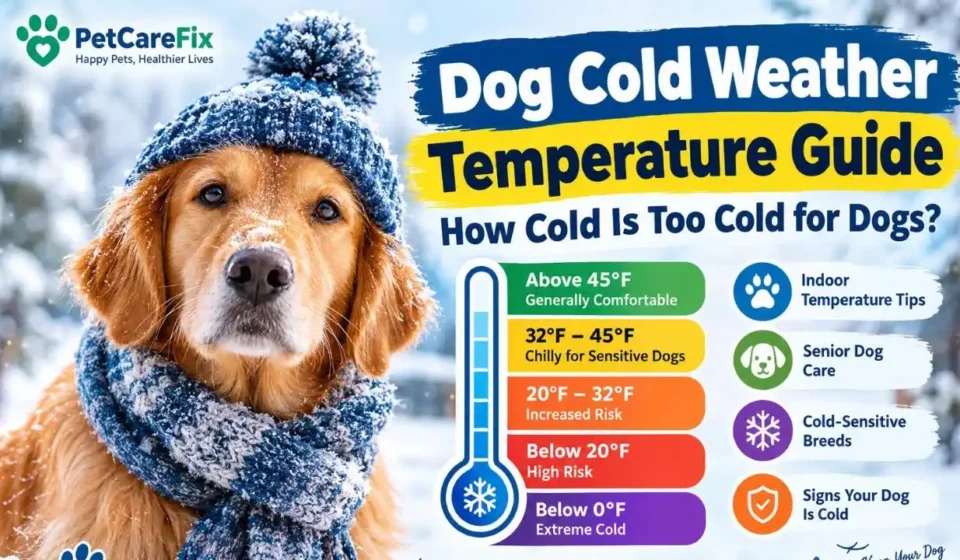

Winter can be beautiful, but cold weather can create serious health risks for dogs. Whether you have a tiny Chihuahua, a senior Golden Retriever, or a thick-coated Siberian Husky, understanding your dog’s cold-weather limits is essential for keeping your furry friend comfortable and safe.
So, what temperature is too cold for a dog? The answer depends on several factors, including breed, size, coat thickness, age, health, wind, and how long your dog stays outside.
As a general guideline, temperatures below 45°F may cause discomfort for dogs that are sensitive to cold, while freezing temperatures of 32°F and below require extra precautions. At temperatures below 20°F, cold exposure can become dangerous for many dogs, regardless of breed, especially with prolonged exposure or strong wind.
These are general guidelines, not guaranteed safety limits. Some dogs become uncomfortable at higher temperatures, while healthy, cold-adapted breeds may tolerate colder conditions for limited periods.
In this dog cold weather temperature guide, you will learn how to use Fahrenheit temperature ranges, recognize signs of cold stress, protect senior dogs, and identify dog breeds that struggle in winter.
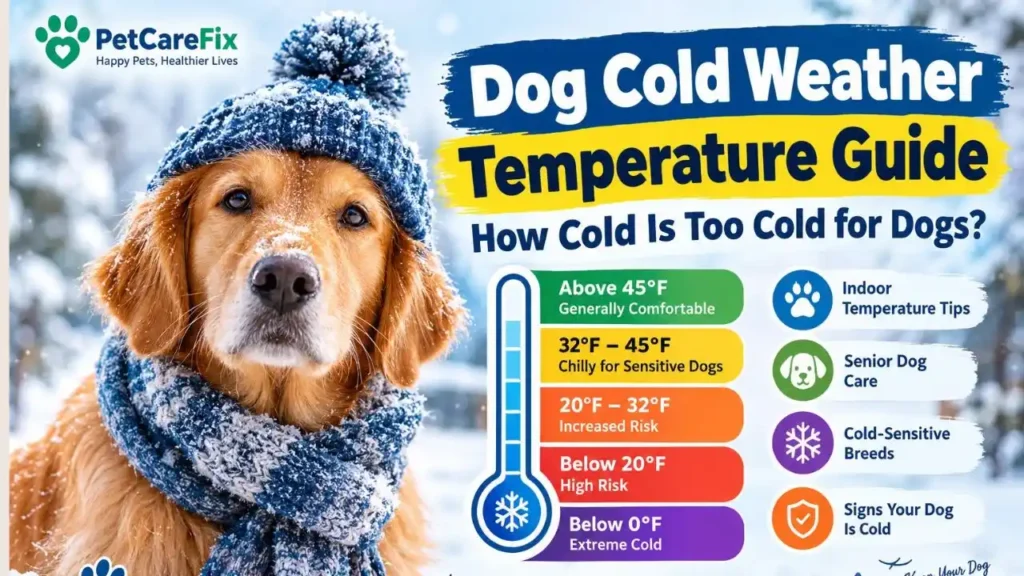
Dog Cold Weather Temperature Guide in Fahrenheit
The easiest way to protect your dog during winter is to understand how outdoor temperatures affect different dogs.
Use the following temperature chart as a practical starting point when planning walks, bathroom breaks, and outdoor play.
Dog Cold Weather Temperature Chart
| Outdoor Temperature (°F) | Cold Weather Risk | Recommended Action |
|---|---|---|
| Above 45°F | Generally comfortable for many dogs | Normal outdoor activities, depending on your dog’s needs |
| 32°F–45°F | Chilly for sensitive dogs | Monitor small, short-haired, and senior dogs |
| 20°F–32°F | Increased cold exposure risk | Keep outdoor trips shorter and consider a warm dog coat |
| Below 20°F | High risk, especially during prolonged exposure | Avoid extended outdoor activities and use brief bathroom breaks |
| Below 0°F | Extreme cold | Keep dogs indoors except for essential, closely supervised trips |
Important: This chart is a general guide rather than a veterinary safety standard. Wind chill, rain, snow, wet fur, individual health, and exposure time can change the risk significantly. A dog showing signs of discomfort should be brought indoors regardless of the thermometer reading.
What Temperature Is Too Cold for Dogs?
There is no single temperature that is too cold for every dog.
For example, a healthy Siberian Husky may enjoy cold-weather activities that would be uncomfortable for a short-haired Chihuahua. However, even cold-adapted breeds can develop hypothermia or frostbite when exposed to extreme conditions.
Here is a simple way to interpret the temperatures:
- 45°F: Some small, thin-coated, elderly, or sick dogs may begin feeling cold.
- 32°F: Freezing conditions require extra caution, especially for vulnerable dogs.
- 20°F: Prolonged outdoor exposure becomes increasingly concerning for all dogs.
- Below 0°F: Extreme conditions warrant keeping dogs indoors and limiting outdoor exposure to essential, brief trips.
Never rely on temperature alone. Your dog’s behavior, body condition, coat, and overall health matter just as much.
What Temperature Is Too Cold for a Dog in a House?
Indoor temperatures are different from outdoor temperatures because dogs are protected from wind, precipitation, and direct exposure to snow or ice.
For many healthy adult dogs, a home maintained around 68°F to 75°F can provide a comfortable starting point during winter. However, this is a practical household guideline, not a universal veterinary requirement.
Small dogs, puppies, senior dogs, and dogs with arthritis or other health conditions may need a warmer resting area.
The U.S. Department of Agriculture’s guidance for regulated dog housing distinguishes between different groups of dogs. It specifies additional protections for dogs that are not acclimated to cold, cold-sensitive breeds, and young, elderly, sick, or injured animals. These facility requirements should not be interpreted as ideal home temperatures for every pet.
Recommended Indoor Temperatures for Dogs
| Dog Type | Practical Indoor Temperature Guidance |
|---|---|
| Healthy adult dog with a thick coat | Often comfortable around 65°F–72°F |
| Small or short-haired dog | Consider 68°F–75°F or a warmer resting area |
| Senior dog | Maintain a comfortable, draft-free environment |
| Puppy | Provide a consistently warm environment and avoid cold floors |
| Dog with arthritis or chronic illness | Ask your veterinarian about individual temperature needs |
These ranges are starting points, not strict medical limits. Observe your dog’s behavior and adjust the environment accordingly.
How to Keep Your Dog Comfortable Indoors
Follow these simple steps:
- Provide a soft, insulated dog bed away from cold floors.
- Keep your dog’s sleeping area away from drafty windows and exterior doors.
- Use blankets that your dog can comfortably move on or off.
- Provide a properly fitted sweater for dogs that struggle to stay warm.
- Avoid placing your dog’s bed directly beside a hot radiator or space heater.
- Never leave heating pads or electric blankets where your dog could chew the cord or become overheated.
Your dog should always have room to move away from a warm spot when necessary.
What Temperature Is Too Cold for Dogs to Sleep Outside?
Dogs should ideally sleep indoors during cold weather. An outdoor doghouse does not automatically protect a dog from freezing temperatures, wind, damp bedding, or changing weather conditions.
At temperatures below 32°F, the risk of cold-related problems increases, particularly for dogs with thin coats, small bodies, or underlying health conditions. Extended exposure becomes even more concerning when temperatures fall below 20°F.
Even if your dog has a thick winter coat, do not assume that sleeping outdoors overnight is safe.
If an outdoor arrangement is unavoidable, consult your veterinarian about appropriate housing. The dog needs protection from wind and precipitation, dry insulated shelter, suitable bedding, and continuous access to unfrozen drinking water.
Additional precautions include:
- Check outdoor temperatures before bedtime.
- Bring your dog inside during extreme cold or severe winter weather.
- Inspect bedding regularly for dampness.
- Never allow drinking water to freeze.
- Avoid leaving puppies, senior dogs, sick dogs, or cold-sensitive breeds outside in winter.
A warm indoor sleeping area is generally the safer choice.
Senior Dog Cold Weather Temperature Guide
Senior dogs often need additional protection during winter. As dogs age, they may experience arthritis, reduced mobility, muscle loss, or medical conditions that make cold weather more difficult to tolerate.
An older dog may also struggle to move away from a cold floor or reach a warm resting place.
Veterinary guidance identifies older dogs and dogs with medical conditions as groups that can have difficulty regulating their body temperature in cold weather.
How to Keep a Senior Dog Warm
1. Maintain a comfortable indoor temperature
Avoid allowing your senior dog’s sleeping area to become excessively cold. If your dog seems uncomfortable, provide a warmer, draft-free location.
2. Use an orthopedic dog bed
A supportive bed can help cushion stiff joints and keep your dog off cold floors.
3. Choose shorter winter walks
Instead of one long walk in freezing weather, consider several shorter outings. Adjust the duration to your dog’s mobility and comfort.
4. Use a winter coat when appropriate
A well-fitting coat can help older dogs with thin fur or reduced cold tolerance stay comfortable outdoors.
5. Monitor changes in movement
If your dog becomes unusually stiff, reluctant to walk, or slower to stand during cold weather, speak with your veterinarian. These signs may indicate arthritis discomfort or another medical issue.
6. Schedule veterinary checkups
Senior dogs with chronic illnesses may need individualized winter-care recommendations.
Do Senior Dogs Feel Cold More Easily?
Many do. Age-related changes, reduced muscle mass, arthritis, and underlying illness can make cold conditions harder to tolerate.
If your senior dog starts shivering, curling tightly into a ball, or avoiding the floor, move them to a warm area and observe their behavior.
Do not assume that all winter discomfort is simply a normal part of aging.
How Do I Know If My Dog Is Cold Inside the House?
Dogs cannot tell you when they feel cold, but they often communicate discomfort through body language and behavior.
Watch your dog carefully, especially at night, during early mornings, or when the indoor temperature drops.
Common Signs Your Dog Is Cold
1. Shivering
Shivering is one of the most recognizable signs of cold discomfort. Persistent shivering can also indicate illness or another medical problem.
2. Curling into a tight ball
Your dog may curl up tightly to conserve body heat.
3. Seeking blankets or warm spots
A cold dog may burrow under blankets, move closer to you, or repeatedly seek a warmer place.
4. Cold paws or ears
The ears and paws may feel cool, but touch alone cannot reliably determine whether your dog is dangerously cold.
5. Whining or restlessness
Some dogs whine, bark, pace, or appear anxious when uncomfortable.
6. Reduced activity
Your dog may become less interested in playing or moving around.
7. Lifting paws or refusing to walk outdoors
These behaviors can indicate that the ground is too cold or that ice and snow are uncomfortable.
Veterinary guidance identifies shivering, whining, a tucked tail, hunched posture, lifted paws, and reluctance to walk as warning signs of cold discomfort.
What Should You Do If Your Dog Is Cold Indoors?
Move your dog to a warm, dry area and provide comfortable bedding. If the coat is wet, gently dry it with a towel.
If your dog appears alert and otherwise normal, observe whether the signs improve after warming up.
Seek urgent veterinary care if your dog has persistent shivering, marked weakness, confusion, difficulty walking, slow or shallow breathing, or collapse. These symptoms can indicate hypothermia or another serious condition.
Do not use very hot water, direct high heat, or a heating device against the dog’s skin.
Dog Breeds That Can’t Handle Cold Weather
Some dog breeds are less suited to cold temperatures because they have thin coats, small bodies, little body fat, or limited insulation.
Small dogs can lose body heat more quickly than larger dogs. Short-haired breeds and dogs without a protective undercoat may also struggle in winter. Puppies, senior dogs, and dogs that are not accustomed to cold climates need additional care.
1. Chihuahua
Chihuahuas are small dogs with relatively little body mass. Their size makes it harder to retain heat, particularly when temperatures drop.
Winter care tip: Use a warm, properly fitted dog coat and keep outdoor trips short in freezing weather.
2. Greyhound
Greyhounds have a lean body shape, a short coat, and little body fat compared with many other breeds.
Winter care tip: Provide a warm indoor bed and use an insulated coat during chilly walks.
3. Dachshund
Dachshunds have short legs that place their bodies close to cold ground, snow, and ice. Smooth-coated varieties may be particularly sensitive.
Winter care tip: Protect your Dachshund’s belly and paws from cold, wet surfaces.
4. Italian Greyhound
Italian Greyhounds have a very fine coat and a slender body. Many need additional protection in cold weather.
Winter care tip: Use warm clothing and avoid prolonged outdoor exposure during freezing conditions.
5. French Bulldog
French Bulldogs have a short coat and compact body. Individual tolerance varies, and their short muzzle can also make strenuous activity more challenging.
Winter care tip: Choose short, supervised walks and avoid strenuous outdoor exercise in extreme weather.
6. Whippet
Whippets have a lean build and a short coat. They may become uncomfortable in cold or windy conditions.
Winter care tip: Provide a warm resting area and consider a coat for outdoor walks.
7. Miniature Pinscher
Miniature Pinschers are small, short-haired dogs that may struggle to stay warm in chilly conditions.
Winter care tip: Keep them indoors when possible and provide a warm layer for necessary outdoor trips.
8. Chinese Crested
Hairless Chinese Cresteds have very little natural insulation over much of their bodies.
Winter care tip: Use suitable clothing and protect exposed skin from cold weather.
Quick Comparison of Cold-Sensitive Dog Breeds
| Dog Breed | Why Cold Can Be Difficult | Recommended Protection |
|---|---|---|
| Chihuahua | Small body size | Warm coat and short outings |
| Greyhound | Thin coat and lean build | Insulated clothing |
| Dachshund | Short legs and limited ground clearance | Warm coat and paw protection |
| Italian Greyhound | Fine coat and slender body | Indoor warmth and winter clothing |
| French Bulldog | Short coat | Supervised, shorter walks |
| Whippet | Lean body and short coat | Coat and draft-free bed |
| Miniature Pinscher | Small size and short coat | Warm indoor resting area |
| Chinese Crested | Little or no hair on much of the body | Protective clothing and limited exposure |
Remember that breed is only one factor. An individual dog’s age, health, body condition, coat, and experience with cold weather all influence tolerance.
Which Dogs Handle Cold Weather Better?
Some breeds have physical characteristics that help them tolerate cold weather better than others.
Examples include:
- Siberian Husky
- Alaskan Malamute
- Saint Bernard
- Newfoundland
- Bernese Mountain Dog
- Samoyed
Many of these breeds have thick coats that provide insulation. However, no dog is immune to extreme cold.
Cold-adapted breeds still need access to shelter, drinking water, and a warm place to rest. Wet fur, strong winds, and prolonged exposure can put even thick-coated dogs at risk.
If a dog normally lives indoors, do not assume it can tolerate freezing weather simply because its breed originated in a cold climate.
How to Protect Your Dog During Cold Weather
Keeping your dog safe in winter does not require an expensive routine. A few practical habits can make a significant difference.
1. Limit Outdoor Exposure
Check the weather before walks. When temperatures are very low, replace long outdoor activities with short bathroom breaks and indoor play.
2. Buy a Properly Fitting Winter Coat
Small, thin-coated, and senior dogs may benefit from a dog coat that covers the body without restricting movement.
Make sure the coat does not rub the skin or interfere with walking.
3. Protect Your Dog’s Paws
Snow, ice, and deicing chemicals can irritate paws. Consider dog booties when appropriate, and check between the toes after each walk.
Wipe your dog’s feet and belly with a damp cloth after returning indoors.
4. Keep Fresh Water Available
Dogs need access to fresh, unfrozen drinking water in winter. Check outdoor water bowls frequently in freezing conditions.
5. Provide a Warm Sleeping Area
Use dry bedding and place your dog’s bed away from drafts. Older dogs may benefit from supportive bedding that makes standing up easier.
6. Avoid Dangerous Heating Methods
Do not leave your dog unattended near an open flame, hot stove, or unsafe space heater. Avoid direct contact with heating devices that could burn the skin.
7. Watch for Hypothermia and Frostbite
Hypothermia occurs when body temperature drops dangerously low. Frostbite damages tissues exposed to extreme cold, particularly the ears, paws, and tail.
Warning signs can include unusual weakness, lethargy, disorientation, pale or bluish skin, swelling, and painful or discolored extremities.
If you suspect hypothermia or frostbite, move your dog to a protected environment and contact a veterinarian immediately. Do not rub suspected frostbitten tissue or apply intense direct heat.
Dog Cold Weather Temperature Guide PDF: Printable Winter Safety Checklist
Looking for a dog cold weather temperature guide PDF that you can save or print?
Use this quick-reference checklist to help your family make safer winter decisions. You can print this section or use your browser’s Print → Save as PDF option to keep a copy.
Printable Dog Winter Safety Checklist
Before Going Outside
- Check the outdoor temperature in Fahrenheit.
- Consider wind, precipitation, and ground conditions.
- Choose a coat for a cold-sensitive dog.
- Keep outdoor activities short when temperatures are very low.
- Bring your dog inside if it shows signs of discomfort.
Inside the House
- Provide a warm, dry sleeping area.
- Keep your dog’s bed away from drafts.
- Make fresh drinking water available.
- Monitor puppies, senior dogs, and dogs with medical conditions.
- Watch for shivering, restlessness, or unusual lethargy.
After Every Winter Walk
- Dry your dog’s coat if it is wet.
- Wipe the paws and belly.
- Check between the toes for ice or irritation.
- Look for redness, swelling, or discoloration.
- Contact a veterinarian if you notice concerning symptoms.
Emergency Reminder: If your dog shows signs of severe cold stress, get veterinary help immediately.
Frequently Asked Questions About Dog Cold Weather Temperatures
1. What Temperature Is Too Cold for a Dog in Fahrenheit?
There is no universal cutoff. Temperatures below 45°F may be uncomfortable for cold-sensitive dogs. At 32°F and below, extra precautions are important, and temperatures below 20°F can be dangerous during prolonged exposure.
2. What Temperature Is Too Cold for Dogs to Sleep Outside?
There is no single safe overnight temperature for every dog. Freezing weather increases the risk of cold-related injury, and prolonged exposure becomes more concerning as temperatures fall. Dogs should ideally sleep indoors, especially puppies, seniors, small breeds, and dogs with health problems.
3. How Do I Know If My Dog Is Cold Inside the House?
Watch for shivering, curling tightly into a ball, seeking blankets, whining, restlessness, and reduced activity. Move your dog to a warm area if you notice these signs. Persistent shivering or weakness requires veterinary attention.
4. Are Senior Dogs More Sensitive to Cold Weather?
Yes, many senior dogs have greater difficulty tolerating cold because of reduced muscle mass, arthritis, mobility problems, or underlying health conditions. A warm sleeping area, comfortable bedding, and shorter walks may help.
5. Which Dog Breeds Cannot Handle Cold Weather?
Chihuahuas, Italian Greyhounds, Whippets, Greyhounds, Miniature Pinschers, and hairless breeds often need extra protection. However, individual cold tolerance varies, so owners should monitor every dog.
6. Can Dogs Get Hypothermia at 32°F?
Yes. Dogs can develop hypothermia in freezing weather, particularly when exposed for extended periods or when they are wet, underweight, young, elderly, or medically vulnerable. Risk depends on several factors, not temperature alone.
7. Is 50°F Too Cold for a Dog to Walk Outside?
Many healthy adult dogs can comfortably walk at 50°F. However, small, short-haired, senior, or sick dogs may need a coat or shorter walks. Watch your dog’s behavior and adjust accordingly.
8. Should Dogs Wear Sweaters Indoors in Winter?
Some dogs benefit from sweaters indoors, especially small breeds, dogs with thin coats, and senior pets. Choose a comfortable fit and remove the sweater if your dog becomes too warm, develops skin irritation, or shows signs of discomfort.
Conclusion
Understanding the dog cold weather temperature guide helps you make safer decisions throughout winter. Although many healthy adult dogs tolerate cool weather, small breeds, short-haired dogs, puppies, senior pets, and dogs with medical conditions often need additional protection.
Remember the basic Fahrenheit guidelines: below 45°F, watch cold-sensitive dogs; at 32°F and below, take extra precautions; and below 20°F, avoid prolonged outdoor exposure.
Keep your dog warm indoors, provide appropriate clothing when needed, protect the paws, and pay attention to signs of cold stress.
Most importantly, remember that temperature charts are guides, not guarantees. Your dog’s behavior and individual health needs should always influence your decisions. A little preparation can help your dog stay comfortable, active, and safe throughout the winter season.
Also read:-