

Have you ever wondered what your dog is trying to tell you when they wag their tail, follow you around the house, or rest their head on your lap? Dogs communicate with people every day, but they use body language rather than words. Understanding these signals can help you recognize when your dog feels happy, safe, comfortable, and connected to you.
Learning the dog body language signs of affection can also help you understand the difference between love, excitement, trust, and anxiety. For example, a dog that sleeps near you may feel safe in your presence, while a dog that follows you everywhere may simply enjoy your company, or may be struggling to feel comfortable alone.
But what about respect? Many dog owners want to know the signs your dog respects you and whether their pet sees them as a trusted leader. In a healthy relationship, these signs are less about dominance and more about trust, cooperation, communication, and feeling secure around you.
In this guide, you’ll discover 15 common signs of canine affection and trust, learn how to read your dog’s body language, and find simple ways to strengthen your bond.
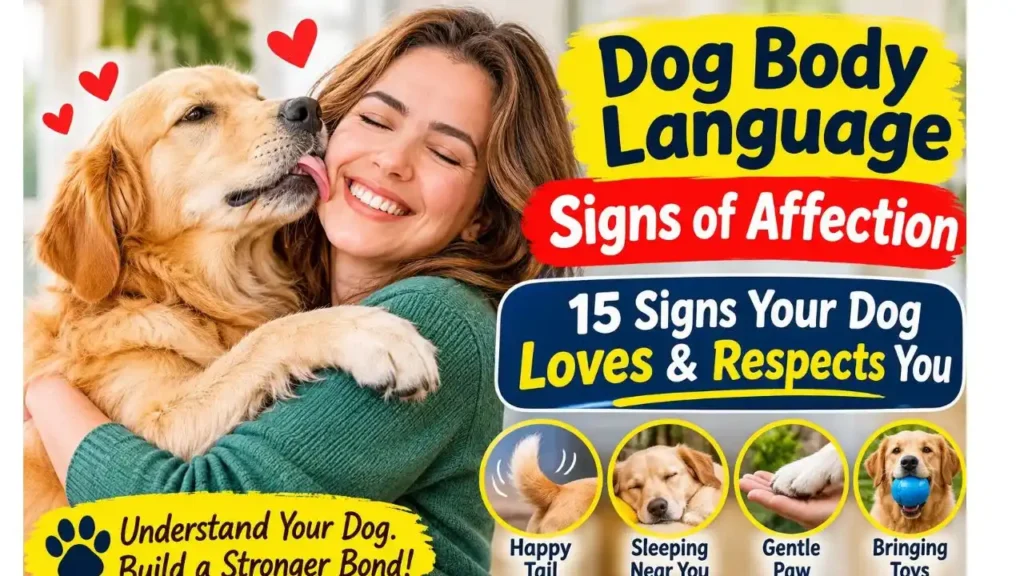
What Does Dog Body Language Tell You?
Dog body language includes facial expressions, ear positions, tail movements, posture, eye contact, and physical behavior. Dogs use these signals to communicate their emotions and responses to the people and animals around them.
For example, a relaxed dog may have soft eyes, loose muscles, and a naturally positioned tail. A frightened dog may lower their body, tuck their tail, turn their head away, or try to create distance.
The most important thing to remember is that you should read your dog’s entire body rather than interpreting one signal on its own.
A wagging tail does not always mean happiness, and a dog that avoids eye contact is not necessarily ignoring or disrespecting you. Context, personality, and the dog’s normal behavior all matter.
15 Dog Body Language Signs of Affection
1. Your Dog Has a Relaxed, Wiggly Body Around You
One of the clearest signs your dog feels comfortable with you is a relaxed body.
When you come home, your dog might wiggle their entire body, move toward you with loose muscles, and greet you with a relaxed expression. Their movements may look playful rather than stiff or controlled.
This behavior often indicates positive excitement and familiarity.
Real-life example: You walk through the front door after work, and your dog approaches with a loose body, a gently wagging tail, and an excited expression. These combined signals suggest that your arrival is a happy event for your pet.
What it means: Your dog may feel comfortable, excited, and socially connected to you.
2. Your Dog Gently Wags Their Tail When They See You
Tail wagging is a familiar behavior that many people associate with affection. However, tail movement communicates emotional arousal rather than happiness alone.
A relaxed, loose wag accompanied by a soft expression and comfortable posture may indicate friendly excitement.
A stiff body, tense facial expression, and high, rigid tail movement can indicate that a dog is alert, uncomfortable, or highly aroused.
Pay attention to the complete picture rather than the tail alone.
What to look for:
- A loose, relaxed tail movement.
- Soft facial expressions.
- A body that appears comfortable rather than stiff.
- Voluntary movement toward you.
These signs can help you understand whether your dog is enjoying the interaction.
3. Your Dog Leans Against You
Does your dog gently lean against your legs while you stand in the kitchen or sit on the couch?
Some dogs enjoy physical contact because it helps them feel close to their favorite people. Leaning may be a sign of affection, comfort, or a desire for attention.
However, not every dog likes close physical contact, and leaning can have other explanations depending on the situation.
What it means: If your dog approaches voluntarily, looks relaxed, and continues leaning comfortably, they may be showing that they enjoy being near you.
Let your dog choose how much contact they want. Affection should feel comfortable for both of you.
4. Your Dog Follows You From Room to Room
A dog that follows you around the house may enjoy your company and want to remain involved in your activities.
For example, your dog might follow you from the living room to the kitchen, lie near your desk while you work, or wait outside the bathroom.
This behavior can reflect attachment, curiosity, learned routines, or the expectation that something interesting might happen.
However, following you constantly is not automatically a sign of love. If your dog becomes distressed whenever you leave, they may need help learning to feel comfortable alone.
What it means: Relaxed following can be a sign of social connection, especially when your dog can also settle independently.
5. Your Dog Makes Soft Eye Contact With You
Gentle eye contact can be an important part of the bond between dogs and humans.
When your dog looks at you with soft eyes, a relaxed face, and comfortable body posture, they may be seeking interaction or responding to your attention.
Some dogs also look at their owners when they need help understanding a situation.
For example, your dog may glance at you during a walk when they hear an unfamiliar sound. They might be checking in with you before deciding what to do next.
Important: Never force eye contact or stare directly into an unfamiliar dog’s eyes. Some dogs find intense staring uncomfortable or threatening.
6. Your Dog Brings You Their Favorite Toy
When your dog brings you a ball, stuffed animal, or rope toy, they may be inviting you to play.
Some dogs also carry toys toward their owners as part of a greeting or attention-seeking routine.
Imagine sitting on the couch after dinner when your dog walks over with their favorite squeaky toy and drops it near your feet. This may be your dog’s way of saying that they want to spend time with you.
What it means: Offering a toy often indicates a desire for social interaction, play, or attention. It can be one of the most enjoyable signs of a strong relationship.
7. Your Dog Sleeps Near You
Sleep is a vulnerable state, so a dog that chooses to rest near you may feel comfortable in your presence.
Your dog might sleep at your feet, curl up beside your bed, or settle on a dog bed in the same room.
However, sleeping near you does not prove affection by itself. Temperature, habit, comfort, and the availability of a soft sleeping spot can also influence where your dog rests.
What it means: If your dog regularly chooses to relax near you while remaining comfortable and undisturbed, this may be a sign of familiarity and trust.
You do not need to let your dog sleep in your bed to build a close relationship. A comfortable sleeping arrangement that works for your household is perfectly fine.
8. Your Dog Licks Your Hands or Face
Licking is a common canine behavior that can serve several purposes.
Some dogs lick their owners during greetings, while others do it to seek attention, explore scents, or respond to social cues.
A gentle lick accompanied by a relaxed body and friendly approach may be part of an affectionate interaction.
However, excessive licking can sometimes be associated with stress, discomfort, or a learned attention-seeking habit.
What it means: Licking may be a social behavior, but it is not a universal sign of love. Look at the situation and your dog’s overall comfort level.
If you do not enjoy being licked, calmly redirect your dog to another behavior rather than punishing them.
9. Your Dog Greets You Happily After You Have Been Away
Many dogs show excitement when their owners return home.
Your dog might approach you with a loose body, wag their tail, bring a toy, or move around you playfully.
These behaviors can reflect familiarity, positive anticipation, and attachment.
A calm greeting can also indicate a healthy bond. Not every dog jumps, barks, or runs around when their owner returns, and quiet behavior does not mean that a dog cares less.
What it means: A comfortable greeting that matches your dog’s personality can be a positive sign of your relationship.
10. Your Dog Rests Their Head on Your Lap
Some dogs gently place their heads on their owners’ laps when they want attention or companionship.
They may look up at you, relax their body, or remain beside you while you watch television.
This behavior often reflects a desire for contact, although dogs may also rest their heads on people because they have learned that it earns attention.
If your dog appears relaxed and willingly stays close, the interaction may be an enjoyable way for them to connect with you.
Always respect your dog’s signals if they move away or seem uncomfortable.
11. Your Dog Shows a Relaxed Facial Expression Around You
A dog’s face can provide useful clues about their emotional state.
Signs of a relaxed expression may include:
- Soft, naturally shaped eyes.
- Relaxed facial muscles.
- A loose mouth without obvious tension.
- Ears resting in a natural position for that individual dog.
Some dogs naturally have wrinkled faces, upright ears, or open mouths, so breed and individual differences matter.
A relaxed expression combined with loose body posture can suggest that your dog feels comfortable in the situation.
12. Your Dog Checks In With You During Walks
Does your dog occasionally look back at you during a walk?
These brief check-ins can be a sign of attention and familiarity. Your dog may be monitoring your position, responding to training, or looking for information about the environment.
For example, your dog hears a noise near a parked car, pauses, and looks toward you. You calmly encourage them forward, and they continue walking.
This does not mean your dog is asking permission for every movement. Instead, it may show that they have learned to pay attention to you during shared activities.
13. Your Dog Chooses to Spend Time Near You
Sometimes affection is quiet.
Your dog may lie beside your chair while you read, relax near your feet while you cook, or choose the same room even when no one is playing with them.
They may not demand attention or seek constant physical contact.
What it means: Voluntarily choosing to share space with you can be a meaningful sign of comfort and social connection.
Dogs have different personalities. Some are cuddly, while others show affection by quietly staying nearby.
14. Your Dog Seeks Comfort From You in Unfamiliar Situations
A dog may approach a familiar person when something seems confusing or frightening.
For example, during a thunderstorm, your dog might move closer to you, remain near your chair, or settle in a familiar room.
Seeking comfort can reflect a relationship in which your dog has learned that you are a source of safety.
Respond calmly and allow your dog to choose a comfortable distance. You do not need to force them to approach the frightening object or situation.
If fear is intense or persistent, consult your veterinarian or a qualified behavior professional.
15. Your Dog Initiates Affection but Can Also Relax Independently
A healthy relationship includes both connection and the ability to feel comfortable without constant attention.
Your dog may ask for petting, bring you a toy, or curl up beside you. Afterward, they might walk away and nap on their own bed.
This ability to move between social interaction and independent rest is generally a positive sign.
A dog does not need to remain beside you all day to demonstrate affection. Giving your pet opportunities to rest, explore, and make choices can help support their overall well-being.
Signs Your Dog Respects You
The phrase “respect” is popular among dog owners, but it is important to understand what it means in modern dog training.
Dogs do not necessarily understand respect in the same way humans do. Rather than looking for signs that your dog considers you a dominant leader, focus on behaviors that demonstrate trust, attention, and learned cooperation.
Here are seven useful signs to look for.
1. Your Dog Responds to Familiar Cues
A dog that responds to cues such as “come,” “sit,” or “leave it” may have developed a strong understanding of your communication.
For example, you call your dog in the backyard, and they return because they have learned that coming to you is worthwhile.
Reliable responses develop through consistent training, appropriate rewards, and practice in different environments.
A dog that occasionally struggles to respond is not necessarily being disrespectful. Distractions, fear, excitement, and incomplete training can all affect behavior.
2. Your Dog Checks In With You
Your dog may glance toward you during walks, training sessions, or unfamiliar experiences.
These check-ins suggest that your dog is attentive to you and may use your behavior as information.
Reward voluntary attention with praise, treats, or opportunities to explore.
3. Your Dog Can Settle Near You
A dog that can relax beside you without constantly demanding attention may feel comfortable in your presence.
They might stretch out on their bed while you work or lie quietly near the couch.
Remember that individual energy levels and training experiences influence this behavior. Puppies and active breeds may need more exercise and enrichment before settling comfortably.
4. Your Dog Cooperates During Daily Routines
Dogs often learn household routines through repetition.
Your dog may wait while you attach their leash, stand calmly during a familiar grooming routine, or move toward the door when you prepare for a walk.
Cooperation is easier to build when routines are predictable and your dog is rewarded for desired behaviors.
For grooming, nail care, and veterinary handling, gradual positive training is preferable to forcing a frightened dog to endure the experience.
5. Your Dog Responds to Your Guidance
A dog may learn to follow your guidance when crossing a street, moving away from a distraction, or returning to you during a walk.
This is best understood as a combination of training, communication, and trust rather than proof of a social rank.
Use clear cues and reward successful responses. Avoid harsh corrections that can make your dog fearful or uncertain around you.
6. Your Dog Allows You to Handle Them Comfortably
A dog that voluntarily participates in gentle handling may be comfortable with the interaction.
However, tolerance should not be confused with trust. A dog that freezes, turns away, tenses up, or tries to escape may be uncomfortable even if they do not growl.
Build handling skills gradually, reward calm participation, and give your dog breaks.
Important: Your dog does not need to tolerate every kind of touch to have a good relationship with you. Respecting their boundaries is part of responsible ownership.
7. Your Dog Feels Safe Communicating Their Needs
A trusting relationship allows a dog to communicate discomfort without being punished for it.
Your dog might move away when they have had enough petting, seek distance from another dog, or signal that they feel uneasy.
Growling is an important warning signal, not simply bad behavior. Never punish a dog for communicating discomfort. Instead, create space and identify what caused the reaction.
A dog that can communicate safely and receive a thoughtful response is better positioned to develop a positive relationship with their owner.
Dog Body Language Signs of Affection vs. Signs of Respect
Affection and respect-related behaviors can overlap, but they are not exactly the same. Affection often involves seeking companionship, while behaviors people describe as respect usually involve learned cooperation, attention, and comfortable communication.
Use this table to understand the difference.
| Dog Behavior | Possible Sign of Affection | Possible Sign of Trust or Cooperation | What to Remember |
|---|---|---|---|
| Wagging tail | Friendly excitement | Comfort in a familiar situation | Tail movement alone does not prove happiness |
| Following you | Enjoys your company | Stays attentive to your activities | Excessive following can indicate anxiety |
| Responding to commands | Enjoys interacting with you | Has learned familiar cues | Training and rewards influence responses |
| Sleeping nearby | Likes being close | Feels comfortable in the environment | Sleeping location also depends on comfort |
| Bringing toys | Wants to play with you | Has learned to initiate interaction | Some dogs bring toys to seek attention |
| Soft eye contact | Social connection | Checks in with a familiar person | Avoid forcing eye contact |
| Leaning against you | Enjoys physical contact | Feels comfortable nearby | Some dogs lean for other reasons |
| Settling on a dog bed | Enjoys sharing space | Can relax during familiar routines | Age and exercise needs affect settling |
| Returning when called | Enjoys reuniting with you | Has learned a recall cue | Practice and positive reinforcement matter |
| Moving away from unwanted touch | May prefer space | Communicates a boundary | Respecting boundaries builds trust |
The key takeaway: Look for patterns of relaxed behavior, voluntary interaction, and positive responses rather than relying on one gesture to determine how your dog feels.
How to Tell If Your Dog Is Happy Around You
Recognizing happiness is an important part of understanding canine body language. Although every dog has an individual personality, several behaviors can suggest that your dog is comfortable and enjoying an interaction.
Look for a Loose Body
A relaxed dog usually moves naturally without obvious stiffness. Their posture may change comfortably as they walk, lie down, stretch, or approach you.
A stiff body, freezing, or sudden changes in posture may indicate discomfort or heightened arousal.
Notice Whether Your Dog Approaches Voluntarily
When dogs feel comfortable, they may approach people to initiate play, request attention, or simply spend time nearby.
If your dog repeatedly moves away, turns their head, or tries to avoid contact, give them space rather than insisting on affection.
Observe Their Response to Petting
Many dogs enjoy gentle petting on the chest, shoulders, or sides of the body. Others have different preferences.
Try petting your dog briefly, then pause. If they move closer, nudge your hand, or otherwise invite more interaction, they may want you to continue.
If they move away or appear tense, stop.
This simple approach helps you learn your dog’s preferences while allowing them to participate in the interaction.
Pay Attention to Changes in Behavior
You know your dog’s normal personality better than anyone else. A dog that is usually playful but suddenly hides, avoids touch, or becomes unusually withdrawn may be experiencing stress, pain, or illness.
If the change is sudden, persistent, or accompanied by other concerning symptoms, contact your veterinarian.
Dog Body Language Signs You Should Not Misunderstand
Not every behavior that looks affectionate means the same thing in every situation. Understanding common misunderstandings can help prevent unnecessary stress.
Does a Wagging Tail Always Mean a Dog Is Happy?
No. Tail wagging can occur during excitement, uncertainty, alertness, and other emotional states.
Look at the dog’s posture, facial expression, movement, and surroundings. A loose, wiggly greeting is different from a stiff posture accompanied by a rigid tail.
Does Showing the Belly Always Mean a Dog Wants Belly Rubs?
No. Some dogs roll over to invite interaction, but others expose their belly as a sign of appeasement or discomfort.
Look for a relaxed body and voluntary engagement. If your dog appears tense, freezes, turns their head away, or tries to move away, do not assume they want a belly rub.
Does Licking Always Mean Love?
No. Licking can be social, attention-seeking, exploratory, or associated with stress.
Consider the context and the rest of your dog’s body language before deciding what the behavior means.
Does a Dog That Ignores You Disrespect You?
Not necessarily. Dogs can struggle to respond because of distractions, excitement, fear, insufficient training, or difficulty understanding a cue.
Instead of interpreting the behavior as defiance, make the task easier, practice in a quieter environment, and reward the response you want.
Does a Dog That Growls Have No Respect for Its Owner?
No. Growling is a form of communication that may signal fear, discomfort, frustration, or a desire for space.
Punishing growling can suppress a warning without resolving the underlying problem. Give the dog space and seek professional guidance if the behavior is repeated or concerning.
How to Build a Stronger Bond With Your Dog
Understanding your dog’s body language is only the first step. You can also develop a stronger relationship by creating positive daily experiences.
1. Spend Quality Time Together
Set aside time every day for activities your dog enjoys. Depending on their age, health, and energy level, this could include walks, gentle play, training, or sniffing games.
You do not need expensive toys or elaborate activities. Short, enjoyable interactions can help make your relationship more rewarding.
2. Use Positive Reinforcement
Reward behaviors you want to encourage with small treats, praise, play, or another reward your dog enjoys.
For example, if your dog comes when called, reward them immediately after they arrive. This helps them learn that responding to you has positive consequences.
Keep training sessions short and adjust the difficulty to your dog’s abilities.
3. Establish Predictable Routines
Dogs often benefit from predictable routines for meals, walks, exercise, rest, and training.
A consistent routine can help your dog understand what to expect and may reduce uncertainty in everyday situations.
However, remain flexible when your dog’s health, weather conditions, or other circumstances require a change.
4. Respect Your Dog’s Personal Space
Even affectionate dogs need time to rest without being touched or disturbed.
Allow your dog to retreat to a comfortable resting area. Avoid hugging, restraining, or waking them unnecessarily, especially if they appear uncomfortable with those interactions.
Teaching children to recognize canine body language is particularly important for household safety.
Children should not disturb dogs while they are sleeping, eating, or trying to move away.
5. Provide Enough Exercise and Mental Stimulation
Physical activity and mental enrichment can support your dog’s overall well-being.
Depending on your dog’s individual needs, useful activities may include:
- Daily walks appropriate for their health and fitness.
- Food puzzles and supervised scent games.
- Short reward-based training sessions.
- Interactive play with suitable toys.
- Opportunities to explore safe environments.
Puppies, senior dogs, and dogs with medical conditions may need different activity levels. Ask your veterinarian for guidance if you are unsure.
6. Learn Your Dog’s Individual Communication Style
Some dogs love cuddling, while others prefer playing or relaxing nearby. Some greet people enthusiastically, while others remain calm.
Avoid comparing your dog’s behavior with that of other pets.
Instead, learn which situations make your dog comfortable, what activities they enjoy, and which signals suggest they need a break.
A good relationship develops when you respond consistently to your dog’s individual needs.
Frequently Asked Questions About Dog Body Language
1. What Are the Biggest Dog Body Language Signs of Affection?
Common signs include voluntarily approaching you, seeking attention, bringing you toys, resting nearby, displaying a relaxed body, and greeting you with friendly excitement. No single behavior proves affection, so consider the entire body and the surrounding situation.
2. What Are the Signs Your Dog Respects You?
Behaviors commonly described as signs of respect include responding to familiar cues, checking in with you, cooperating with learned routines, and relaxing comfortably around you. These behaviors are better understood through trust, communication, and training than through ideas about dominance.
3. How Do Dogs Show They Trust Their Owners?
Dogs may demonstrate trust by voluntarily approaching their owners, relaxing nearby, seeking comfort in unfamiliar situations, and participating willingly in familiar activities. Trust develops gradually through predictable care and positive experiences.
4. Why Does My Dog Follow Me Everywhere?
Your dog may follow you because they enjoy your company, expect attention, or have learned your daily routine. However, persistent following accompanied by distress when you leave may indicate separation-related difficulties. If your dog struggles to be alone, consult your veterinarian or a qualified behavior professional.
5. Why Does My Dog Look at Me and Wag Their Tail?
Your dog may be excited, seeking attention, anticipating a reward, or checking in with you. The meaning depends on the rest of their body language. A relaxed expression and loose movements can suggest friendly excitement, while stiffness and tension may indicate discomfort or heightened arousal.
6. Do Dogs Have a Favorite Person?
Many dogs develop stronger social bonds with particular people based on their experiences, interactions, routines, and individual preferences. A favorite person may be someone who regularly provides care, play, training, or comforting companionship. However, dogs can form meaningful relationships with several people.
7. How Can I Make My Dog Love and Trust Me More?
Build trust through consistent care, positive reinforcement, appropriate exercise, enjoyable play, and respect for your dog’s boundaries. Avoid frightening or painful training methods. Allow your dog to approach voluntarily and reward desirable behavior.
8. Does Sleeping Next to Me Mean My Dog Loves Me?
Sleeping near you may indicate that your dog feels comfortable in your presence and enjoys being nearby. However, dogs also choose sleeping locations based on temperature, habit, and comfort. Your dog can have a strong bond with you even if they prefer sleeping in their own bed.
Conclusion
Recognizing the dog body language signs of affection can help you understand your pet’s emotions and strengthen your relationship. From relaxed greetings and gentle eye contact to bringing toys and choosing to rest nearby, dogs communicate their preferences through everyday behavior.
The signs your dog respects you are best understood as signs of trust, attention, cooperation, and positive communication. A dog that responds to familiar cues, feels comfortable around you, and can communicate when they need space may be developing a healthy relationship with you.
Remember that every dog is different. Some show affection through cuddling, while others prefer play or quiet companionship. Rather than expecting your dog to behave in a particular way, learn their individual signals and respect their boundaries.
The best way to build a strong bond with your dog is to make them feel safe, understood, and cared for every day.
At PetCareFix, we believe that understanding your pet is an important part of responsible pet ownership. By learning to read your dog’s body language, you can make everyday interactions more positive and build a relationship based on trust.
Also read:-

