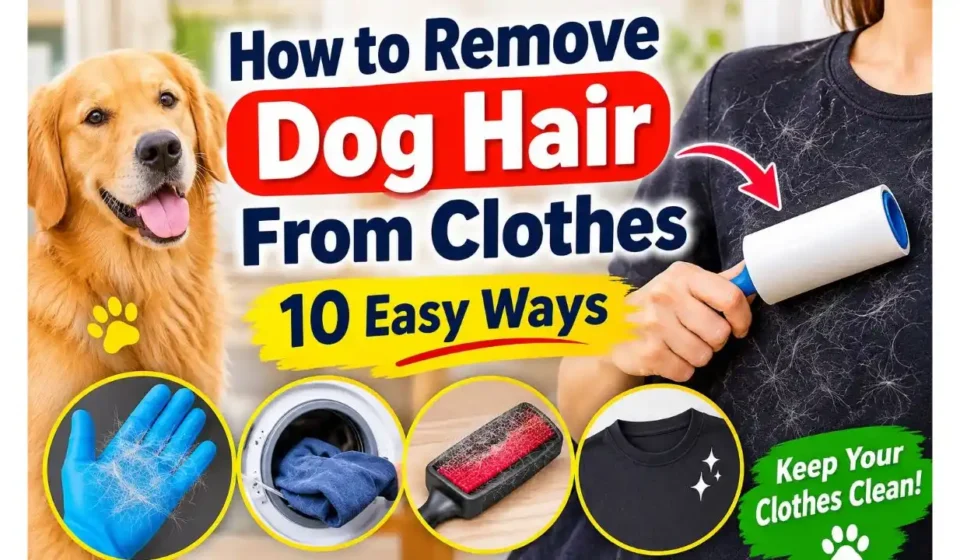

Dog hair on clothes is a common problem for pet owners. Whether you have a Golden Retriever, Labrador, German Shepherd, Chihuahua, or another furry companion, you probably know how frustrating it can be to put on a clean black shirt only to find it covered in dog hair.
The good news is that you do not need expensive cleaning products to solve this problem. Everyday household items, such as lint rollers, dryer sheets, rubber gloves, and your washing machine, can help remove dog hair from clothing.
In this guide, you will learn how to remove dog hair from clothes quickly and effectively, including how to get dog hair off clothes without a lint roller, how to remove stubborn fur from laundry, and how to prevent pet hair from sticking to your favorite outfits.
Whether you are getting ready for work, preparing for a special occasion, or doing your weekly laundry, these simple methods can help keep your clothes cleaner.
Why Does Dog Hair Stick to Clothes?
Dog hair sticks to clothing because of a combination of fabric texture, friction, and static electricity.
When your dog sits on your lap, rubs against your legs, or cuddles with you on the couch, loose fur transfers onto your clothes. Some fabrics hold onto this hair more strongly than others.
Here are the main reasons dog hair sticks to clothing:
- Static electricity: Dry air and friction can create static charges that attract loose fur.
- Fabric texture: Fleece, wool, velvet, and some knitted fabrics can trap hair between their fibers.
- Shedding: Dogs naturally shed old or loose hair, although the amount varies by breed, season, and individual dog.
- Laundry habits: Washing pet-hair-covered clothes without removing loose fur first can leave hair on the fabric or transfer it to other items.
Understanding why dog hair sticks to clothes makes it easier to choose the right cleaning method.
1. Use a Lint Roller to Remove Dog Hair From Clothes
A lint roller is one of the easiest ways to remove dog hair from clothes. It is particularly useful when you need to clean an outfit quickly before leaving home.
Lint rollers use adhesive sheets to pick up loose fur, lint, and other small particles from fabric.
How to Use a Lint Roller
- Lay your clothing on a flat surface.
- Remove the used adhesive sheet if necessary.
- Roll the lint roller over the areas covered in dog hair.
- Apply gentle pressure, especially around sleeves, collars, and pockets.
- Replace the adhesive sheet when it becomes full of hair.
- Repeat until most of the visible fur is gone.
Best for: T-shirts, dress shirts, trousers, skirts, and everyday clothing.
Pro tip: Keep a travel-size lint roller in your car, office, or handbag so you can remove dog hair whenever you need to.
2. Remove Dog Hair From Clothes Without a Lint Roller
If you do not have a lint roller, do not worry. Several household items can help remove pet hair from clothing.
Use a Damp Rubber Glove
A clean rubber cleaning glove can collect loose dog hair through friction.
Follow these steps:
- Put on a clean rubber glove.
- Lightly dampen the glove with water.
- Run your hand over the clothing in one direction.
- Watch as the hair gathers into small clumps.
- Remove the collected hair and repeat as needed.
Avoid soaking the fabric. Too much water can make some materials difficult to clean.
Use a Slightly Damp Sponge
A clean sponge can help lift dog hair from sturdy fabrics.
Lightly dampen the sponge and wipe the clothing in short, gentle strokes. Rinse the sponge when it collects too much fur.
Test this method on a small, hidden area first, especially when cleaning delicate or textured fabrics.
Use Your Hands
For a small amount of dog hair, slightly dampen your palms and gently sweep your hands across the fabric.
This method works best for a few loose hairs rather than heavily covered clothing.
Best for: Quick cleaning when you do not have specialized pet-hair removal tools.
3. Put Clothes in the Dryer Before Washing
One useful way to remove dog hair from washable clothing is to use your clothes dryer before washing.
The dryer’s tumbling action and airflow can loosen some pet hair, allowing the lint filter to collect it.
How to Remove Dog Hair With a Dryer
- Check the clothing care labels to confirm that the items are dryer-safe.
- Place the dry, hair-covered clothes in the dryer.
- Run a short, no-heat or air-fluff cycle if your dryer offers one.
- Remove the clothes and inspect them.
- Clean the lint filter according to the manufacturer’s instructions.
- Wash the clothes as usual if they need cleaning.
Do not use this method for garments that cannot safely be tumble-dried.
Important: Clean the lint filter before and after the cycle. Dog hair can collect in the filter and restrict airflow. If your clothes remain heavily covered in fur, use a lint roller or rubber glove before drying.
4. Use Dryer Sheets to Reduce Static and Pet Hair
Dryer sheets are designed to reduce static cling in compatible laundry. Reducing static may help some loose dog hairs release from clothing.
However, dryer sheets do not remove every type of pet hair, especially fur deeply embedded in thick fabrics.
How to Use Dryer Sheets
- Check whether the clothing can be tumble-dried.
- Place the garments in the dryer.
- Add a dryer sheet according to the product instructions, if appropriate.
- Use a suitable drying cycle.
- Remove the clothes and check for remaining hair.
Some dryer sheets can leave residues that affect towels, moisture-wicking clothing, and certain fabrics. Follow the garment and product care instructions.
Best for: Reducing static on compatible everyday clothing.
Alternative: Dryer balls may help reduce static and separate laundry during drying, although they are not guaranteed to remove all dog hair.
5. Use White Vinegar in the Washing Machine
White vinegar is sometimes recommended for pet-hair removal because it may help reduce static and soften some washable fabrics.
However, vinegar is not a guaranteed dog-hair remover, and it cannot replace manually removing heavily embedded fur.
How to Try White Vinegar Safely
- Check the washing machine and garment manufacturers’ instructions.
- If vinegar is permitted, add a small amount of plain white vinegar to the appropriate dispenser according to the machine’s guidance.
- Wash the clothing using the recommended cycle and detergent.
- Check the clothes after washing.
- Remove any remaining hair with a lint roller or another suitable tool.
Do not mix vinegar with chlorine bleach or other cleaning chemicals. Never pour vinegar into a dispenser that the manufacturer says is incompatible with it.
Best for: Some washable garments affected by static.
Remember: A good laundry routine and removing loose fur before washing are usually more reliable than depending on vinegar alone.
6. Try a Pet Hair Removal Brush
A reusable pet hair removal brush can be a practical alternative to disposable lint rollers.
Many brushes use specially designed surfaces or materials to collect loose fur as you move them across the fabric.
How to Use a Pet Hair Removal Brush
- Lay the garment flat.
- Test the brush on a small, inconspicuous area.
- Brush in the direction recommended by the manufacturer.
- Remove accumulated fur from the brush.
- Repeat gently until the clothing looks cleaner.
Avoid aggressive brushing on delicate knits, loosely woven fabrics, or garments that may snag.
Best for: Repeated use at home, especially if you have multiple shedding pets.
7. Use a Microfiber Cloth to Pick Up Loose Dog Hair
A clean microfiber cloth can collect loose dog hair from many smooth, sturdy fabrics.
Its fine fibers help pick up dust and loose particles, making it useful for quick touch-ups.
Steps to Follow
- Use a clean microfiber cloth.
- If necessary, lightly dampen it.
- Wipe the clothing gently in one direction.
- Gather the fur as it collects.
- Rinse or shake out the cloth away from clean laundry.
Always test the method first because some fabrics may snag or react poorly to rubbing.
Best for: Lightweight pet hair on smooth clothing, jackets, and sturdy trousers.
8. Use a Pumice Stone Carefully on Suitable Fabrics
A fabric-safe pet hair stone or specially designed pet-hair removal tool may help lift stubborn fur from certain durable textiles.
Although household pumice stones are sometimes suggested online, they can damage clothing if used incorrectly.
How to Use a Pet Hair Stone
- Check that the tool is intended for the fabric you want to clean.
- Test it on a hidden area.
- Move it gently over the fabric in the recommended direction.
- Stop immediately if the material begins to pill, snag, or show damage.
- Remove the collected hair.
Do not use a regular pumice stone on delicate clothing, fine knits, silk, or fabrics that may be easily abraded.
For everyday shirts and trousers, a lint roller or rubber glove is generally the safer starting point.
9. Remove Dog Hair From Clothes in the Washing Machine
Washing clothes can remove some loose fur, but a washing machine is not designed to remove every hair trapped in fabric.
If you put heavily fur-covered clothes directly into the washer, some hair may remain on the garments or collect around the washer’s filter and other components.
The Best Way to Wash Dog Hair-Covered Clothes
Follow this routine for better results:
Step 1: Shake the clothes outside.
Give each garment a good shake to remove loose hair before bringing it to the washing machine.
Step 2: Use a lint roller or rubber glove.
Remove as much visible fur as possible, paying attention to sleeves, waistbands, pockets, and seams.
Step 3: Separate heavily covered clothing.
Keep clothes covered in large amounts of dog hair separate from relatively clean garments.
Step 4: Wash with the right detergent.
Use an appropriate laundry detergent and follow the clothing care labels. Avoid overloading the washer.
Step 5: Check the clothes before drying.
If hair remains, remove it before putting the garments in the dryer.
Step 6: Clean the washer if needed.
Follow the manufacturer’s instructions for cleaning the drum, filter, and other serviceable parts.
This routine helps reduce leftover fur and prevents unnecessary buildup in your laundry equipment.
10. Prevent Dog Hair From Sticking to Clothes
Removing dog hair is easier when you prevent it from accumulating in the first place.
Here are some simple habits that can help.
Brush Your Dog Regularly
Regular brushing helps collect loose fur before it lands on your clothes and furniture.
Choose a brush suitable for your dog’s coat type. Long-haired dogs, short-haired dogs, and double-coated breeds may require different grooming tools.
Ask your veterinarian or professional groomer for advice if you are unsure which brush is appropriate.
Keep a Pet Blanket on the Couch
If your dog enjoys sitting beside you, place a washable blanket on the couch or your favorite chair.
Wash the blanket regularly according to its care instructions.
This can reduce the amount of hair transferred to your clothing when you sit down.
Store Clean Clothes Properly
Keep freshly washed clothes inside closets, drawers, or garment bags.
Avoid leaving clean laundry on pet beds, couches, or other surfaces where loose hair collects.
Choose Pet-Hair-Friendly Fabrics
Some fabrics are easier to clean than others.
Smooth, tightly woven materials often release loose hair more easily than fuzzy or heavily textured fabrics. However, the results depend on the particular material, finish, and type of dog hair.
Keep Pet-Hair Removal Tools Nearby
Place a lint roller near your front door, in your bedroom, or beside your laundry area.
A convenient cleaning tool makes it easier to remove fur before it becomes a bigger problem.
Comparison Table: Best Ways to Remove Dog Hair From Clothes
The best method depends on your clothing material, the amount of hair, and how much time you have.
| Method | Best For | Cost | Ease of Use | Main Limitation |
|---|---|---|---|---|
| Lint roller | Everyday clothing and quick touch-ups | Low | Very easy | Adhesive sheets need replacing |
| Rubber glove | Loose hair without a lint roller | Very low | Easy | May not remove deeply embedded fur |
| Damp sponge | Small areas of loose fur | Very low | Easy | Excess moisture can affect some fabrics |
| Dryer air-fluff cycle | Dryer-safe clothing before washing | Low if you own a dryer | Easy | Not suitable for every garment |
| Dryer sheets | Reducing static on compatible clothing | Low | Easy | May leave residue and do not remove all fur |
| Pet hair removal brush | Regular household cleaning | Low to moderate | Easy | Effectiveness varies by brush and fabric |
| Microfiber cloth | Smooth, sturdy fabrics | Low | Easy | May be less effective on thick, textured material |
| Washing machine | Routine laundry after pre-cleaning | Varies | Easy | Does not reliably remove all embedded hair |
| Pet hair removal stone | Certain durable fabrics | Low | Moderate | Can damage unsuitable materials |
| Regular grooming | Preventing future hair buildup | Varies | Moderate | Requires consistent grooming |
How to Remove Dog Hair From Different Types of Clothing
Not all clothing should be cleaned in the same way. Choosing the right method helps protect your garments.
How to Remove Dog Hair From Black Clothes
Dog hair is especially noticeable on black shirts, pants, leggings, and jackets.
Use a lint roller before leaving home. For larger areas, a suitable pet-hair brush can help remove loose fur.
Keep black clothes away from pet blankets and beds, and store them in a closed closet after washing.
How to Remove Dog Hair From Jeans
Denim is generally more durable than delicate clothing.
Use a lint roller or slightly damp rubber glove to collect loose fur. For stubborn hair, try a fabric-safe brush.
Before washing, shake the jeans outside and remove as much loose hair as possible.
How to Remove Dog Hair From Fleece
Fleece can trap pet hair because of its soft, textured surface.
Use a gentle lint roller or a pet-hair tool specifically suitable for fleece. Avoid rough scraping, which may damage the fabric or cause pilling.
Follow the care label when washing and drying fleece garments.
How to Remove Dog Hair From Wool
Wool requires extra care because aggressive rubbing and unsuitable tools can damage the fibers.
Use a soft clothing brush or a lint roller that is appropriate for the garment. Avoid soaking wool unless the care instructions permit washing.
For expensive wool coats or delicate wool garments, consider professional cleaning.
How to Remove Dog Hair From Delicate Clothes
For silk, fine knits, and other delicate fabrics, begin with the gentlest suitable method.
Check the care label, test any cleaning tool in a hidden area, and avoid abrasive stones or vigorous rubbing.
If the garment is particularly valuable or fragile, consult a professional cleaner.
Common Mistakes to Avoid When Removing Dog Hair
A few common mistakes can make pet-hair removal more difficult.
1. Washing clothes before removing loose fur
Large amounts of loose hair may remain on garments or accumulate in the washing machine. Remove as much as possible before washing.
2. Overloading the washing machine
Clothes need enough room to move during washing. Follow your washer’s load recommendations.
3. Using too much water on clothing
A damp glove or sponge should be only slightly wet. Excess moisture can leave marks or affect certain fabrics.
4. Scrubbing delicate fabrics aggressively
Rough tools and vigorous rubbing can cause snags, pilling, or other damage.
5. Ignoring the dryer lint filter
Pet hair can collect in the lint filter and restrict airflow. Clean it according to the dryer’s instructions.
6. Assuming one method works for every fabric
The best method for denim may not be appropriate for wool or silk. Always consider the material before cleaning.
Frequently Asked Questions About Removing Dog Hair From Clothes
1. What Is the Fastest Way to Remove Dog Hair From Clothes?
A lint roller is usually one of the fastest ways to remove loose dog hair from clothing. Roll it over the affected areas until the visible fur is collected.
For larger amounts of hair, a reusable pet-hair removal brush may be more convenient.
2. How Can I Remove Dog Hair From Clothes Without a Lint Roller?
You can use a slightly damp rubber glove, a clean microfiber cloth, or a lightly damp sponge.
Move the item gently across the fabric to collect the fur. Test the method on a hidden area first.
3. Does Putting Clothes in the Dryer Remove Dog Hair?
A dryer can help loosen some pet hair from dryer-safe clothing. A short, no-heat or air-fluff cycle may help move loose fur into the lint filter.
However, the results vary by fabric and dryer. Remove heavily embedded hair beforehand, and clean the lint filter after use.
4. Does White Vinegar Help Remove Dog Hair From Clothes?
White vinegar may help reduce static in some laundry situations, but it is not a guaranteed pet-hair removal solution.
Check your washing machine’s instructions before using vinegar, and never mix it with chlorine bleach.
5. How Do I Keep Dog Hair Off Black Clothes?
Use a lint roller before wearing black clothes and store clean garments in a closed closet.
Regularly brush your dog, wash pet blankets, and keep clean laundry away from areas where your dog rests.
6. Why Is Dog Hair Still on My Clothes After Washing?
Dog hair can become trapped in textured fabrics or remain attached because of static electricity.
Remove loose fur before washing, avoid overloading the washer, and inspect the clothing before drying.
7. What Is the Best Fabric for Avoiding Dog Hair?
Smooth, tightly woven fabrics often make it easier to remove loose fur than fuzzy materials such as fleece.
However, no fabric is completely resistant to dog hair. The amount of shedding and the specific fabric construction both matter.
8. Can I Use a Regular Pumice Stone to Remove Dog Hair?
A regular pumice stone can damage clothing through abrasion. Use only a pet-hair removal stone designed for the particular fabric, and test it in a hidden area first.
Avoid abrasive tools on delicate garments.
Conclusion
Learning how to remove dog hair from clothes can make everyday life easier for dog owners. You do not need to spend a lot of money or buy several specialized products to keep your wardrobe looking clean.
For quick results, start with a lint roller. If you do not have one, try a slightly damp rubber glove or microfiber cloth. For laundry, remove loose fur before washing and use a dryer only when the garment’s care label permits it.
Most importantly, prevent future buildup by brushing your dog regularly, washing pet blankets, and storing clean clothes properly.
With a few simple habits, you can enjoy spending time with your furry best friend without constantly worrying about dog hair on your favorite clothes.
Also read:-