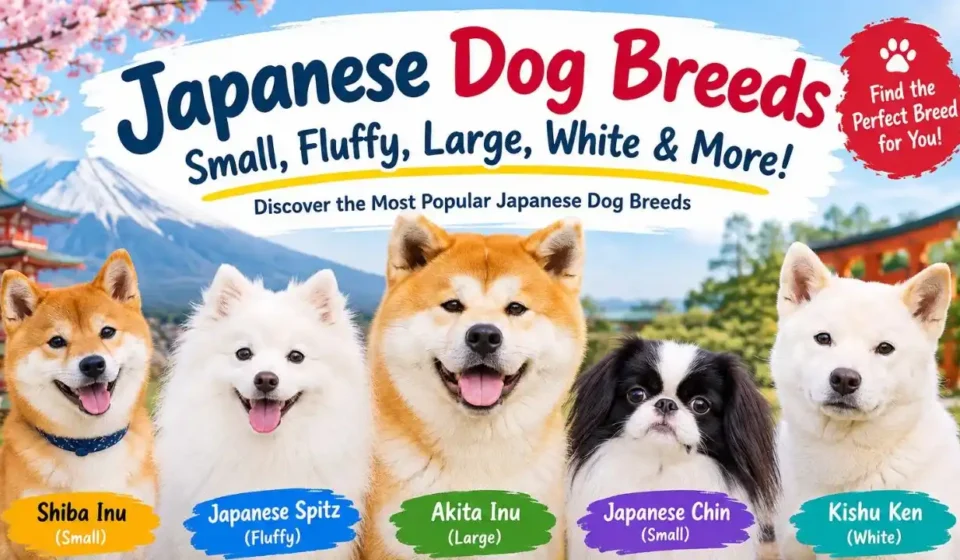

Japanese dog breeds are known for their loyalty, intelligence, distinctive appearance, and fascinating history. From the fluffy Shiba Inu to the powerful Akita Inu, Japan is home to several dog breeds that have become popular with families and dog lovers in the United States.
If you are searching for a Japanese dog breed, you may be looking for a small apartment-friendly companion, a fluffy family dog, a large protective breed, or even a white Japanese dog. Each breed has its own personality, exercise needs, grooming requirements, and temperament.
In this guide, we’ll explore the most popular Japanese dog breeds, including small, fluffy, large, and white varieties. We’ll also discuss Japanese dog breed puppies and answer some common questions, including the popular Japanese dog breeds crossword clue.
What Are Japanese Dog Breeds?
Japanese dog breeds are dogs that originated in Japan and developed alongside Japanese communities over many generations. Several traditional breeds were originally used for hunting, guarding, or companionship.
Some Japanese breeds are considered ancient or historically significant. The country’s mountainous terrain and regional hunting traditions influenced the development of many native breeds.
Today, Japanese dogs can be found around the world, including throughout the United States. The Shiba Inu, Akita Inu, and Japanese Chin are especially recognizable to American dog owners.
While these breeds can share certain characteristics, they should not be treated as one group with identical personalities. A Shiba Inu, for example, has very different needs from an Akita.
Most Popular Japanese Dog Breeds
When people search for the most popular Japanese dog breeds, several names commonly appear.
1. Shiba Inu
The Shiba Inu is one of the best-known Japanese dog breeds in the United States. It is a small-to-medium-sized dog with an alert expression, curled tail, pointed ears, and thick double coat.
Shiba Inus are intelligent and independent. They can form strong bonds with their families but may not always have the easygoing personality of a traditional people-pleasing breed.
They are energetic and generally need daily exercise and mental stimulation. Early socialization and consistent training can help owners manage their independent nature.
2. Akita Inu
The Akita Inu is a large Japanese breed recognized for its powerful build, thick coat, and dignified appearance.
Akitas are known for being loyal and protective of their families. Because of their size and strength, they require responsible ownership, early socialization, and appropriate training.
The Akita’s thick coat also means owners should expect regular shedding, particularly during seasonal coat changes.
3. Japanese Spitz
The Japanese Spitz is a small-to-medium white dog with a fluffy coat and bright, alert expression.
Its white appearance is one of its most recognizable characteristics. Japanese Spitz dogs are often described as affectionate and companion-oriented.
Their fluffy coat requires regular brushing, but their relatively manageable size can make them appealing to people looking for a smaller Japanese dog.
4. Japanese Chin
The Japanese Chin is a small companion breed with a distinctive facial appearance, silky coat, and elegant movement.
Unlike hunting breeds such as the Shiba Inu, the Japanese Chin was primarily developed as a companion dog.
Its small size can make it suitable for various living environments, although owners still need to provide exercise, attention, grooming, and regular veterinary care.
5. Shikoku
The Shikoku is a medium-sized Japanese hunting breed that originated on Shikoku Island.
It has an athletic body, pointed ears, and a thick coat. The breed was traditionally associated with hunting in mountainous areas.
Shikoku dogs can be energetic and independent, making them better suited to owners who understand the needs of active breeds.
6. Hokkaido
The Hokkaido, sometimes called the Hokkaido Ken, is a medium-sized Japanese breed originating from Hokkaido.
It was historically used for hunting and developed to cope with challenging weather conditions.
The breed has a thick double coat and a strong, athletic body. Its history makes it particularly interesting for people who want a less common Japanese dog breed.
7. Kai Ken
The Kai Ken is another Japanese hunting breed, historically associated with the mountainous regions of Japan.
One of its most recognizable characteristics is its brindle coat. Kai Kens are athletic, intelligent, and often very devoted to their owners.
They generally benefit from regular physical activity and mental stimulation.
8. Kishu Ken
The Kishu Ken is a medium-sized Japanese breed traditionally used for hunting.
It typically has a short-to-medium double coat and can be found in several colors, with white being particularly common.
Kishu Kens are often described as loyal and reserved. Their hunting background means they may have strong instincts and need appropriate training and socialization.
Japanese Dog Breeds Small: Which Ones Are Best Known?
If you’re specifically searching for Japanese dog breeds small, several breeds stand out.
The Shiba Inu is probably the most recognizable small-to-medium Japanese breed. The Japanese Chin is significantly smaller and was developed primarily as a companion.
The Japanese Spitz is another relatively small option, although its fluffy coat can make it appear larger than it actually is.
Small Japanese Dog Breed Comparison
| Breed | Size | Coat | Personality | Exercise |
|---|---|---|---|---|
| Shiba Inu | Small-medium | Short, double coat | Independent, alert | Moderate-high |
| Japanese Chin | Small | Long, silky | Affectionate, gentle | Low-moderate |
| Japanese Spitz | Small-medium | Long, fluffy | Friendly, lively | Moderate |
| Kai Ken | Medium | Double coat | Intelligent, active | High |
For apartment living, size is only one consideration. A smaller dog can still have substantial exercise, training, and mental stimulation needs.
Fluffy Japanese Dog Breeds
Searching for fluffy Japanese dog breeds usually leads people toward breeds with thick or long coats.
The Japanese Spitz is one of the clearest examples. Its bright white coat gives it a classic fluffy appearance.
The Akita Inu also has a thick double coat, although its larger size makes it very different from the Japanese Spitz.
The Shiba Inu has a dense double coat but generally has a shorter outer coat than the Japanese Spitz.
Grooming a Fluffy Japanese Dog
Fluffy dogs require more than occasional brushing. Regular grooming can help remove loose hair, prevent excessive matting, and keep the coat looking healthy.
Owners should also pay attention to:
- Nail trimming
- Ear cleaning
- Dental care
- Bathing when necessary
- Seasonal shedding
- Regular brushing
If you are considering a fluffy Japanese breed, be prepared for dog hair around the home, particularly during heavy shedding periods.
Japanese Dog Breeds Large
If you are interested in Japanese dog breeds large, the Akita Inu is the most obvious example.
The Akita is a powerful, muscular dog that can be much larger and stronger than breeds such as the Shiba Inu.
Large Japanese dogs require careful consideration before adoption or purchase. Owners need enough space, appropriate exercise opportunities, training experience, and the ability to manage a strong dog safely.
A large breed can also mean higher costs for food, supplies, grooming, medications, and veterinary care.
Japanese Dog Breeds White
When searching for Japanese dog breeds white, two breeds are particularly worth knowing.
Japanese Spitz
The Japanese Spitz is famous for its bright white, fluffy coat. Its appearance is one of the main reasons people recognize the breed.
Kishu Ken
The Kishu Ken can also have a white coat. Unlike the fluffy Japanese Spitz, however, the Kishu has a more athletic hunting-dog appearance.
Akita Inu
Akitas can also have white coloring, including dogs with predominantly white coats. However, coat color should not be the only factor when choosing a dog.
Temperament, size, exercise needs, grooming requirements, and health considerations are equally important.
Japanese Dog Breed Puppies: What Should You Know?
Searching for Japanese dog breed puppies can be exciting, but choosing a puppy requires careful research.
Before bringing home a puppy, learn about the breed’s expected adult size, temperament, exercise requirements, grooming needs, and potential health concerns.
Look for a Responsible Breeder
If purchasing a puppy from a breeder, look for someone who is transparent about health testing, veterinary care, puppy socialization, and the parents’ history.
A responsible breeder should be willing to answer questions rather than rushing you into a purchase.
Consider Adoption
Some Japanese breeds and Japanese-breed mixes may also be available through shelters or rescue organizations.
Adoption can be an option for people who are open to adult dogs, mixed breeds, or dogs whose history may be less certain.
Puppy Socialization Matters
Early socialization can help puppies become comfortable around people, dogs, sounds, environments, and everyday experiences.
Training should be positive, consistent, and appropriate for the puppy’s age.
Which Japanese Dog Breed Is Right for a Family?
There is no single Japanese breed that is ideal for every American household.
Families should consider several factors before choosing a dog.
| Your Lifestyle | Breed Characteristics to Consider |
|---|---|
| Apartment living | Smaller size and manageable exercise needs |
| Active household | Athletic breeds with higher exercise needs |
| First-time owner | Trainability and temperament |
| Children at home | Individual temperament, supervision, and socialization |
| Minimal grooming | Shorter or easier-to-maintain coat |
| Love fluffy dogs | Japanese Spitz or thick-coated breeds |
| Want a large dog | Akita Inu and other larger breeds |
| Prefer a companion | Japanese Chin |
Remember that individual dogs can behave differently even within the same breed.
Japanese Dog Breeds and American Homes
Japanese dogs can make wonderful companions in the United States, but their needs should be understood before bringing one home.
Climate is one consideration. Several Japanese breeds have thick double coats, which can require additional management in hot climates.
Owners living in warmer parts of the USA should provide shade, fresh water, appropriate exercise schedules, and a comfortable indoor environment.
Never assume that shaving a double-coated dog is the best way to keep it cool. Discuss grooming decisions with a veterinarian or professional groomer who understands the breed.
Training Japanese Dog Breeds
Training is particularly important for independent Japanese breeds.
Shiba Inu, Akita Inu, and several traditional hunting breeds can be intelligent but independent. They may not respond to training in exactly the same way as highly biddable breeds.
A good approach includes:
- Short, consistent training sessions
- Reward-based methods
- Early socialization
- Clear household rules
- Regular mental stimulation
- Patience and consistency
Harsh training methods can damage trust and may create additional behavior problems.
Japanese Dog Breeds Crossword Clue
If you searched for Japanese dog breeds crossword clue, the answer depends on the number of letters and the exact crossword puzzle.
Common Japanese dog breed names that may appear in puzzles include:
- Akita
- Shiba
- Chin
- Shikoku
- Kishu
- Kai
- Hokkaido
For example, a crossword clue asking for a five-letter Japanese dog breed may potentially refer to Akita or Shiba, depending on the crossing letters and wording.
Always check the intersecting letters because multiple Japanese dog breed names can fit similar clues.
Are Japanese Dog Breeds Good Pets?
Japanese dog breeds can be affectionate, loyal, intelligent, and fascinating companions. However, their suitability depends on the individual dog and the owner’s lifestyle.
Some are independent and active, while others are primarily companion dogs.
Before choosing a breed, consider:
- How much exercise can you provide?
- How much grooming are you comfortable doing?
- How much space do you have?
- Do you have experience training dogs?
- Are there children or other pets in your household?
- Can you afford routine and unexpected veterinary expenses?
- Can you commit to caring for the dog for its entire life?
These questions can help you narrow down your choices.
Frequently Asked Questions Japanese dog breed
1. What is the most popular Japanese dog breed?
The Shiba Inu is one of the best-known and most recognizable Japanese dog breeds, particularly in the United States.
2. What is the smallest Japanese dog breed?
The Japanese Chin is one of Japan’s smallest native companion breeds. The Shiba Inu is also relatively small compared with larger breeds such as the Akita Inu.
3. What Japanese dog breed is white and fluffy?
The Japanese Spitz is especially known for its fluffy, bright white coat.
– 4. What is a large Japanese dog breed?
The Akita Inu is a large Japanese dog breed known for its powerful build, thick coat, and loyal nature.
– 5. What Japanese dog breeds are commonly used for crossword clues?
Akita, Shiba, Chin, Kishu, Kai, and Shikoku are Japanese dog breed names that may appear as crossword answers. The correct answer depends on the clue and number of letters.
Conclusion on Japanese Dog Breeds
Japanese dog breeds offer an impressive range of sizes, personalities, coats, and histories. From the small Japanese Chin and recognizable Shiba Inu to the fluffy Japanese Spitz and powerful Akita Inu, there is considerable variety.
If you’re researching Japanese dog breeds small, fluffy Japanese dog breeds, Japanese dog breeds large, or Japanese dog breeds white, look beyond appearance. A dog’s exercise needs, temperament, grooming requirements, training needs, and suitability for your household are all important.
For people searching for Japanese dog breed puppies, take time to research breeders, rescue organizations, health information, and responsible puppy care before making a decision.
Whether you’re researching Japanese breeds for a future pet or simply curious about these fascinating dogs, understanding their history and individual characteristics is the best place to start.
Also read:-