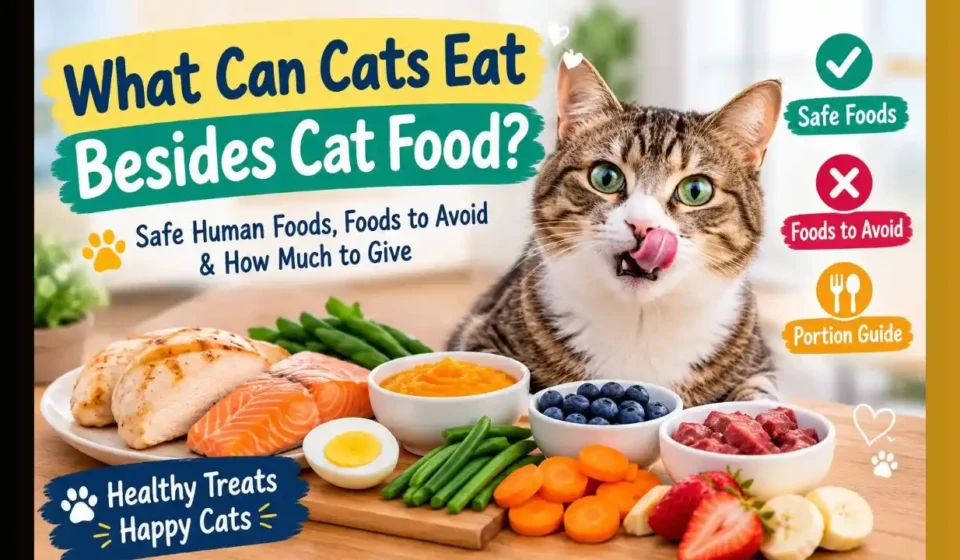

If you’ve ever watched your cat stare at your dinner plate, you’ve probably wondered, “What can cats eat besides cat food?” Cats can enjoy some human foods as occasional treats, but not everything that is safe for people is safe for cats.
Cats are obligate carnivores, which means their bodies are designed to get most of their nutrition from animal-based foods. Their regular diet should still be a complete and balanced cat food. However, certain plain foods can be offered in small amounts as occasional treats.
In this guide, we’ll cover safe human foods for cats, foods to avoid, how much you can give, and simple ways to offer treats safely.
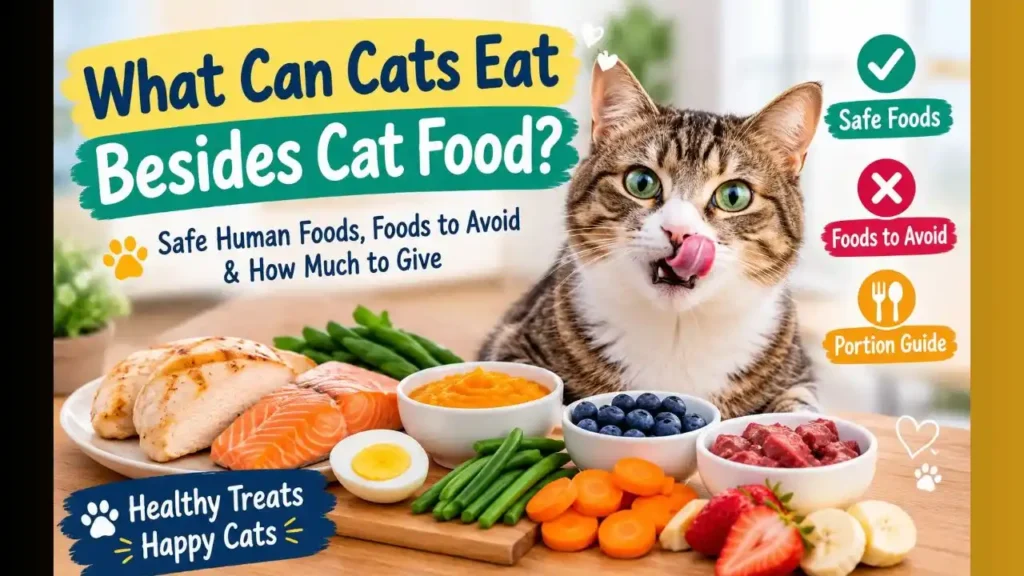
What Can Cats Eat Besides Cat Food?
Cats can eat several types of plain, cooked human foods in moderation. Some of the easiest options include:
- Cooked chicken
- Cooked turkey
- Cooked beef
- Cooked fish
- Cooked eggs
- Plain pumpkin
- Plain cooked carrots
- Plain green beans
- Small amounts of certain fruits
The safest choices are generally plain, unseasoned animal proteins because they are closer to what cats naturally need.
Remember that treats should remain a small part of your cat’s overall diet.
Can Cats Eat Cooked Chicken?
Yes. Plain, cooked chicken is one of the simplest human foods you can give a cat as an occasional treat.
Chicken provides protein and may be especially appealing to cats because of its meaty smell and texture.
How to Give Chicken to Your Cat
Remove:
- Bones
- Skin
- Excess fat
- Seasonings
- Sauces
Cut the cooked chicken into small, bite-sized pieces and allow it to cool before serving.
Avoid chicken prepared with garlic, onion, heavy seasoning, spicy sauces, or excessive salt.
Example
If you’re making plain chicken breast for your family, you can set aside a tiny piece before adding seasonings. Once cooked and cooled, that piece can become an occasional cat treat.
Can Cats Eat Turkey?
Yes, cats can generally eat plain, fully cooked turkey in small quantities.
Turkey can be a useful high-protein treat, but preparation matters.
Choose plain turkey rather than:
- Deli turkey
- Smoked turkey
- Heavily salted turkey
- Turkey with gravy
- Turkey seasoned with garlic or onion
A small piece of plain cooked turkey is very different from a slice of highly processed lunch meat.
Can Cats Eat Beef?
Plain, fully cooked beef can also be offered occasionally.
Small pieces of lean cooked beef can provide protein, but avoid giving your cat beef covered in:
- Salt
- Garlic
- Onion
- Butter
- Spicy seasoning
- Rich sauces
Fatty foods can also cause digestive problems for some cats.
Can Cats Eat Fish?
Many cats love fish, and plain cooked fish can be offered as an occasional treat.
Some options include:
- Salmon
- Cod
- Tuna
- Whitefish
Fish should be thoroughly cooked and served plain.
What About Canned Tuna?
A small amount of plain tuna may be okay as an occasional treat, but tuna should not become your cat’s primary food.
Human canned tuna isn’t formulated to provide all the nutrients a cat needs. Some cats may also become very interested in tuna and begin refusing their normal food.
If you want to feed tuna regularly, talk with your veterinarian about an appropriate cat food formulated for cats.
Can Cats Eat Eggs?
Yes. Plain, fully cooked eggs can be an occasional treat for cats.
You can offer a small amount of:
- Scrambled egg
- Hard-boiled egg
- Cooked egg white
- Cooked egg yolk
Don’t add salt, butter, cheese, pepper, or other seasonings.
Eggs are nutritious, but they should be treated as a snack rather than a replacement for balanced cat food.
Can Cats Eat Pumpkin?
Plain pumpkin can be appropriate for cats in small quantities.
Some cat owners use plain pumpkin as part of a veterinarian-approved approach for certain digestive issues because it contains fiber.
However, don’t assume pumpkin will treat diarrhea, constipation, or another medical problem. Persistent digestive symptoms should be discussed with a veterinarian.
Choose the Right Pumpkin
If you’re offering pumpkin, choose plain 100% pumpkin puree.
Avoid pumpkin pie filling because it can contain:
- Added sugar
- Spices
- Other ingredients that aren’t appropriate for cats
Can Cats Eat Carrots?
Cats can eat small amounts of plain, cooked carrots.
Carrots aren’t necessary for a cat’s diet, but some cats may enjoy them as an occasional treat.
Cook them until soft and cut them into tiny pieces.
Raw carrot chunks can be difficult for some cats to chew, so cooked carrots are generally easier to offer safely.
Can Cats Eat Green Beans?
Plain cooked green beans can be given to some cats as an occasional snack.
They don’t provide the animal-based nutrition cats require, so they shouldn’t replace meat-based food.
Avoid green beans prepared with:
- Garlic
- Onion
- Butter
- Cream sauce
- Excess salt
A small piece of plain green bean is a very different choice from a serving of green bean casserole.
Can Cats Eat Fruit?
Some cats can safely eat tiny amounts of certain fruits, although fruit isn’t an essential part of a cat’s diet.
Potential options include small pieces of:
- Blueberries
- Strawberries
- Apples with seeds and core removed
- Bananas
- Seedless watermelon
Because cats aren’t naturally drawn to sweet flavors in the same way humans are, many cats simply aren’t interested in fruit.
Keep Fruit Portions Tiny
Think of fruit as an occasional taste, not a regular part of your cat’s meals.
Also, always remove seeds, pits, cores, stems, and other parts that could create a choking or digestive hazard.
What Human Foods Should Cats Avoid?
Knowing what cats cannot eat is just as important as knowing what they can eat.
Some foods can be dangerous or toxic to cats.
Avoid giving cats:
| Food | Why You Should Avoid It | Safe Alternative |
|---|---|---|
| Chocolate | Can be toxic to pets | Plain cooked chicken |
| Onions | Can damage red blood cells | Plain cooked turkey |
| Garlic | Toxic to cats | Plain cooked meat |
| Grapes/raisins | Potentially dangerous to pets | A tiny piece of cat-safe fruit |
| Alcohol | Toxic to cats | Fresh water |
| Caffeinated drinks | Can cause serious problems | Fresh water |
| Xylitol-containing foods | Can be dangerous to pets | Cat treats |
| Raw yeast dough | Can expand and ferment | Plain cooked food |
| Cooked bones | Can splinter | Boneless cooked meat |
| Very salty foods | Excess salt can be harmful | Unseasoned meat |
If your cat accidentally eats a potentially toxic food, contact your veterinarian or a pet poison resource promptly rather than waiting for symptoms.
Can Cats Eat Dairy Products?
This is a common question from cat owners.
Some cats can tolerate tiny amounts of certain dairy products, while others develop digestive upset. Many adult cats have reduced ability to digest lactose.
Milk, cream, ice cream, and other dairy products aren’t necessary for cats.
If your cat gets diarrhea or vomiting after eating dairy, avoid giving it again and speak with your veterinarian if symptoms are significant or persistent.
Can Cats Eat Raw Meat?
Cats are naturally adapted to eating animal tissue, but that doesn’t mean every raw meat product is automatically safe.
Raw meat can carry bacteria and parasites that may pose risks to pets and people in the household.
For many households, plain, thoroughly cooked meat is a simpler option for an occasional treat.
If you’re considering a raw-food diet for your cat, discuss it with your veterinarian or a veterinary nutrition professional first.
How Much Human Food Can Cats Eat?
The amount depends on your cat’s size, health, age, activity level, and overall diet.
A useful general principle is to keep treats—including human-food treats—to no more than about 10% of your cat’s daily calorie intake, with the remaining calories coming from a complete and balanced diet.
For example, instead of giving your cat a large portion of chicken from your dinner plate, offer a few tiny pieces as a treat.
Think “Treat,” Not “Meal”
Your cat doesn’t need a human-sized snack.
A small bite can be enough to satisfy curiosity and provide variety without significantly disrupting the cat’s normal diet.
Best Human Foods for Cats: Quick Guide
Here’s a simple reference for busy cat parents.
| Human Food | Generally Safe? | How to Serve |
|---|---|---|
| Chicken | Yes | Cooked, plain, boneless |
| Turkey | Yes | Cooked, plain, boneless |
| Beef | Yes | Cooked, lean, unseasoned |
| Salmon | Yes | Cooked and plain |
| Tuna | Occasionally | Small amount, plain |
| Egg | Yes | Fully cooked and plain |
| Pumpkin | Yes | Plain puree, small amount |
| Carrots | Yes | Cooked and chopped |
| Green beans | Yes | Plain and cooked |
| Blueberries | Occasionally | Small amount |
| Banana | Occasionally | Tiny piece |
| Milk | Not recommended for many cats | Avoid or ask your vet |
| Chocolate | No | Avoid |
| Onion | No | Avoid |
| Garlic | No | Avoid |
What Can Kittens Eat Besides Cat Food?
Kittens have different nutritional needs from adult cats.
Growing kittens need adequate calories, protein, vitamins, minerals, and other nutrients to support rapid development. Their primary diet should therefore be a complete and balanced kitten food appropriate for their life stage.
Giving a kitten lots of human food can also make it harder to maintain a nutritionally appropriate diet.
If you have a young kitten and want to introduce treats, ask your veterinarian what is appropriate for its age and development.
What About Senior Cats?
Senior cats may have different nutritional needs depending on their health.
Some older cats have dental problems, kidney disease, diabetes, digestive issues, or other conditions that can affect what foods they should eat.
For this reason, don’t assume that a human food that was fine for your cat years ago is appropriate if its health or diet has changed.
Your veterinarian can help you choose treats that fit your cat’s current nutritional needs.
How to Introduce New Foods to Your Cat
Cats can be creatures of habit. Introducing a new food suddenly may cause digestive upset or simply lead to your cat refusing it.
Try this approach:
1. Start With a Tiny Amount
Offer a very small piece the first time.
2. Keep It Plain
Don’t add sauces, seasoning, butter, salt, or spices.
3. Watch Your Cat
Look for signs such as vomiting, diarrhea, itching, or other unusual reactions.
4. Don’t Introduce Several Foods at Once
If your cat reacts badly, introducing one food at a time makes it easier to identify the potential cause.
5. Keep Treats Occasional
Human food should complement—not replace—a nutritionally complete cat diet.
Why Do Cats Beg for Human Food?
If your cat jumps onto the kitchen counter every time you open a package of chicken, you’re not alone.
Cats may be attracted to human food because of:
- Strong smells
- Interesting textures
- Curiosity
- Attention from their owners
- Previous rewards
- The natural appeal of animal protein
Sometimes a cat learns that staring at you during dinner results in a tasty bite.
If you want to give treats, establish a consistent routine rather than rewarding begging every time.
Can Human Food Replace Cat Food?
No.
Even healthy human foods don’t automatically provide everything a cat needs.
Cats require specific nutrients, including taurine, arachidonic acid, and other essential nutrients that are provided in properly formulated complete and balanced cat foods.
A piece of chicken may be a good treat, but chicken alone isn’t a complete long-term diet for a cat.
The same applies to fish, eggs, beef, and other individual foods.
Frequently Asked Questions Cat Food
– What is the healthiest human food for cats?
Plain, cooked lean meat such as chicken or turkey can be a convenient occasional treat for many healthy cats. It should not replace a complete and balanced cat food.
– Can cats eat rice?
Small amounts of plain, fully cooked rice are generally not considered toxic to cats, but rice isn’t nutritionally necessary for them. Avoid rice dishes containing onion, garlic, heavy seasoning, or sauces.
– Can cats eat bread?
A small amount of plain, fully baked bread may not be harmful to a healthy cat, but bread provides little nutritional value for cats. Never give cats raw yeast dough.
– Can cats eat cheese?
Some cats can tolerate a tiny amount, but many adult cats don’t digest lactose well. Cheese isn’t necessary for a cat’s diet and can cause digestive problems.
– Can cats eat peanut butter?
Peanut butter isn’t a necessary food for cats and can contain ingredients that aren’t appropriate for them. It’s better to choose a cat-specific treat.
– Can cats eat dog food?
An occasional bite of dog food generally isn’t the same as feeding a cat a proper diet, but dog food should not be used as a cat’s regular food. Cats have specific nutritional requirements that dog food isn’t designed to meet.
Conclusion: What Can Cats Eat Besides Cat Food?
So, what can cats eat besides cat food?
For many healthy cats, occasional small portions of plain cooked chicken, turkey, beef, fish, eggs, pumpkin, carrots, and green beans can be suitable treats. Certain fruits can also be offered in tiny amounts.
The most important rule is simple: keep human food plain, portions small, and treats occasional.
Your cat’s main diet should remain a complete and balanced food formulated for cats. Avoid potentially dangerous ingredients such as onions, garlic, chocolate, alcohol, caffeine, and foods containing other harmful ingredients.
When you’re unsure whether a particular food is safe, check with your veterinarian before offering it, especially if your cat is a kitten, senior, overweight, or has an underlying health condition.
A little variety can make treat time fun, but your cat’s nutritional needs should always come first.
Also read:-